لم تُترجم هذه الصفحة بالكامل بعد. يظهر بعض النص أدناه أو كله بلغة English، وهي لغته الأصلية.
Rules of Engagement | House Rules
House Rules
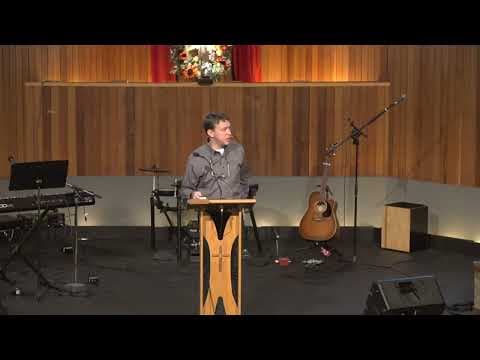
Ps Penny Maxwell · Freedom House Church
Most marital conflict comes not from the surface issues (money, chores, schedules) but from unhealed wounds and attachment patterns formed in childhood.
- الواعظ
- Ps Penny Maxwell
- الكنيسة
- Freedom House ChurchNon-DenominationalCharlotte, United States
- التاريخ
- زمن القراءة
- 28 دقيقة
- عدد الكلمات
- 6,166 كلمة
- اللغة
- الإنجليزية
المقاطع الكتابية
الوسوم
الفئات
شخصيات كتابية
الخلاصات
في هذه العظة▾
Welcome and Introduction
Good morning, Freedom House. I just realized this is the first time that I have got to be with you guys since my husband and I got back from sabbatical. So, you just better get ready — you know I've got a lot of energy stored up. Someone told me in the hallway, "Pastor P, when you preach, it's always one of those messages." I guess that's true. I taught this message at our Lake Norman campus and the husbands were telling me they all came out with bruised ribs from getting elbowed by their wives.
In this series called House Rules, you're going to be hearing from all of our different teaching team throughout the rest of the series about marriage, family, and parenting. But if you are single, I would be taking some serious notes, because I wish I would have learned this stuff 34 years ago when I got married. I did not know any of this stuff, and it would have saved me a lot of heartache.
Today I'm going to be talking about the house rules, but more specifically, rules of engagement — how to fight right.
What Couples Really Fight About
In the 34 years that we've been married, and 34 years of doing ministry, we have sat down with hundreds of couples. When we ask, "Hey, what's going on?" they say, "We're having issues with communication," or "issues with money," or "issues with the in-laws" — or outlaws, one or the other. Issues with sex, clothes on the floor, somebody loading the dishwasher wrong or squeezing the toothpaste wrong. You name it, we have heard it — the incredible long list of all the different reasons why people are fighting.
In my own 34 years of marriage, Pastor Troy and I have had some epic fights, and I'm going to tell you about some of them today, because I don't think it's right for me to talk about being authentic and engaged in an argument without being honest about places we've been — and even places we're still trying to work through.
What it looks like is the issue — schedules, sex, all of these different things. But I want you to know it's really not those things. There's nothing like an argument on the way to church. It's really something deeper. The deeper issue is that those things are simply the trigger. The explosion is coming from somewhere inside. I want us to hone in and go to the root issue.
The Mystery of Two Becoming One
God says to Adam and Eve, "The two flesh shall become one." Jesus repeats that same sentiment multiple times in the gospels: the husband and wife leave their father and mother and become one flesh. Paul repeats this in Ephesians — the two shall become one — and adds, "What a great mystery that is." And it is a mystery how two separate people can become one flesh.
There's a challenge with that:
- When you have two broken people that become one.
- When you have two different histories, two different family stories, two different family systems that become one.
- When you have two different attachment styles that become one.
I'm not going to go in depth on attachment styles because my husband and I did a series last year in February — four straight weeks dealing with attachment styles — so I'd prefer you go back and watch that. But I can tell you that 99.9% of every single argument, every single disagreement that my husband and I have had has been because of attachment styles. The issues you thought you had at work with your boss or co-workers are actually attachment styles too. When you learn those, you can watch them play out.
When you come from two different backgrounds, two different stories, two different histories, and come together as one, there's some stuff that needs to be worked out. God says two become one — that means there are things in us that we have to let go of.
Unhealed Wounds, Not Broken People
What we're really fighting is not each other — we're fighting unhealed wounds that can present as money issues, parenting issues, communication issues, sexual issues. But it's all unhealed wounds. You're not broken. You're actually patterned. There's a pattern there, and today we're going to chase those patterns down, take a look at them, and reform them, because we want healthy marriages.```
What I'm preaching today is not just about marriage — you can apply this to every relationship in your life: children, work, the PTA circle, Bunko, the golf course. If you're a boss with people working for you, study these things, because it plays out in every relationship.
I'd encourage you to take notes today, because when people email me or DM me and ask "what was point number three?" — if you write it down, the chances of you actually applying this in your life go up over 50%. That's a big deal. I want you to take what you hear on Sunday and use it Monday through Saturday to change your family, your marriage, your world.
It doesn't matter what you came in here with today — if you apply these, you will see things drastically change. I don't care if your marriage is on the brink of divorce — my God is more than able. And even if you think, "my marriage is going good," let me tell you, there's another level it can go to. God is not a God of average. He's not even a God of a little above average. He's a miracle-working, powerful God.
Patterns: How We Learned to Survive
I have a sneaking suspicion it's not just Pastor Troy and I that have had issues in our marriage. I don't think you can be married for 34 years and think that every day everything's smelling like tulips.
Patterns are actually what you became in order to survive. There are patterns we establish at a young age and we think they're just who we are, our personality. I hear people say, "I'm just quiet. I'm just reserved." No — there's probably a pattern that you learned at a young age that made you go inward.
We do the things we do because somewhere along the line there was a perceived payoff, and we develop a pattern. Things that are quietly passed down through generations, through family history, through culture — they get embedded in our bodies and in our nervous systems.
Some of you look at the things you do like they were a mistake — "I wish I wouldn't do that." It's actually not a mistake. Your body did those things as an adaptation. Your body was trying to protect you.
My Own Story
The five-year-old Penny learned that if she asserted herself, if she stood up — I watched people be bullied, I watched people be abused — I was going to do one of two things: shrink back, or stand up and protect. I'm a fierce protector of people. I also learned at a young age that there were people given authority and charge over me that were not healthy, and I learned to read a room, almost to the point of hyper-vigilance.
It's one thing to be vigilant; it's another to be hypervigilant. People who have come back from the battlefield are the same way — hypervigilant, they know all the exits because they're used to battle. As a little girl, I developed that pattern: be on guard, look for things, check for things, because you have to protect yourself because nobody else did.
So as an almost-55-year-old, the 5-year-old little Penny did what she needed to do in order to survive. 55-year-old Penny doesn't need to keep that pattern, because 55-year-old Penny understands that God is her protector, her defender — a strong tower of refuge I can run to. I don't get mad when I see that pattern pop up. I just think, "Oh, thank you for protecting me — but don't forget God's doing that now."
Recognizing Your Own Patterns
All of us develop patterns. When there are issues in our life that need addressing — marriage or family — we assume, "Oh, that's just my personality, I just pull away, that's just who I am, I've always been that way." I want to submit to you that it's not your personality. It's a pattern that you developed to keep yourself safe. Today, we're going to break that. More accurately than a pattern, it's a form of protection.
Let me give you some others you might see yourself in:
- Maybe you shut down because quiet feels safer than vocalizing.
- I always have to be loud in order to be heard.
- Asking for too much might cost me connection, so I stuff things internally.
- If I'm not the strong one, someone might control me.
- If I flee or shut down in conflict, it's because it's overwhelming and I don't know how to process it — my nervous system learned to run.
I'm going to offer some language today for things you've been carrying for a long time but maybe weren't able to name. Now, it doesn't mean every single disagreement with your spouse or partner is childhood trauma, but I would say a good chunk of it either is childhood trauma or patterns learned from dysfunction, even in seemingly good families.
I was talking to somebody who said, "Oh, I had a great family, I had this, I had that." And I said, "Well, then why does your wife say this when you engage in conflict? Why do you shut down? Why do you back away? Why do you dumb yourself down?" There's a pattern. He learned this pattern.
Marriage Is a Mirror, Not the Cause
Marriage does not create brokenness, but it will absolutely expose it. Sometimes we look at our partner and say, "You did this, this is your fault, you brought this reaction out of me." What I want you to know is marriage is a mirror. It's going to reflect who you are.
The reason God gave you your spouse is not so you could be happy. I know you think, "I got married to be happy." You will not find that anywhere in scripture. God did not give you your spouse to make you happy — He gave you your spouse to grow you the heck up, so we could mature, so we could be more like the Lord. Not so we could just be happy all the time.
If you went into marriage thinking, "I just want to be happy," you're going to have a difficult time, because it's not like that all the time. Maybe the first week, the honeymoon phase — and then it's "why is your stuff in my drawer? Do you have to come all the way over on my side of the bed? Do your socks really go there?" It starts quick.
- Marriage doesn't make you angry. It reveals anger that was already there.
- Marriage doesn't create insecurity in you. It exposes insecurity that was already present long before you met your spouse.
- Marriage doesn't make you controlling, but it will expose your need for control.
- Marriage doesn't create abandonment fears. It exposes them that were instituted and installed at a very young age.
The fight usually starts in me before it comes out of me. But we want to blame and say, "This is your fault, you made me angry." Your spouse cannot make you angry. Nobody can make you angry without your approval.
Every meaningful relationship will experience conflict. You just have to decide: am I willing to do what it takes to be healthy and walk through relationships? This applies to every relationship — you're going to butt up against other people when there are parts of you that aren't healthy, and you'll blame somebody else for why you feel the way you do. But it doesn't matter how the tone came across or when or how it was said — we choose our reaction.
Did you know that you can love Jesus and still disagree? The goal of healthy relationships is not conflict avoidance. The person across from you is not your enemy. The goal is to engage in conflict without destroying the connection — even when it feels like the Fourth of July and there are fireworks going off.
Rules of Engagement
Let's talk about the rules of engagement. If you want to make it Christianese and you don't want to call it fighting, we can just call it intense fellowship. When my husband and I engage in intense fellowship, there are things we have to keep in mind.
Rule 1: Attack the Problem, Not the Person
Many times, when you feel yourself heating up, you think you're Rocky in the ring about to take down Apollo Creed with a left hook, a right hook. We go into fight mode because we feel like we need to protect ourselves — our spouse becomes our opponent, and we're going to knock them out.
If we can remember, we are attacking the problem, not the person. Ephesians 6:12 says:
"For our struggle is not against flesh and blood."
Sometimes it feels like it is — sometimes it feels like your spouse is the problem. But he's not. There's a difference between "we have a problem" and "you are the problem." One addresses behavior; the other attacks identity. And when we start attacking identity, we guarantee the fight escalates.
For example:
- "Hey, when you said that, it really hurt" versus "You are so stinking selfish, I can't believe you would say such a thing."
- "When we were having a conversation the other day, I felt like I was dismissed, I don't feel like I was fully heard" versus "You only think of yourself, that's all you care about, you just think about you, you, you, and what you want."
One addresses behavior, the other attacks identity. Healthy conflict addresses what happened without assassinating the person. Sometimes when we're angry we want to win the argument, but it's more important to win the person than the argument. If winning the argument cost you the relationship, you did not win.
When you get in an argument with your spouse, understand your spouse is not the bad guy. The pattern is the bad guy. Focus on the pattern. This has helped us immensely through the years.
Rule 2: Stay in the Room
For some of you that may sound easy; for others, it's going to be a huge challenge. In the early days of our marriage — the first year we were married — with two different attachment styles and two different family histories coming together, I remember us getting in an argument, and he would get in the car, take his car keys, and leave.
I didn't have a tracker back then to share location — there weren't even iPhones or cell phones. So I didn't know what he was doing, where he was going, if he was going to Taco Bell, if he was coming back or not. We'd get in an argument and he'd leave — sometimes gone 20 minutes, sometimes a couple of hours.
When he would be gone, my nervous system was a wreck, because that was familiar — people leaving, abandonment was familiar. I would brace myself anytime we got into a disagreement because I thought he would flee. His head was, "I don't know what to do in this situation, and I don't want to say something I'll regret, so I'll just escape." We didn't know how to converse with each other and go to the deep issues. I was 20 years old when we got married, and we didn't have this kind of teaching. We didn't grow up with this. I wish we had, but we didn't — we had to learn through lots of difficult scenarios.
One time, when he got ready to leave during an argument, I looked at him and said, "You walk out that door and don't you come back," because my nervous system had had just about enough. I didn't truly mean it, but it was my way of trying to control the situation.
When Conflict Triggers Old Wounds
That happened a few times. Sometimes he'd be gone for 20 minutes, sometimes a couple of hours, and he would come back. When he would be gone, my nervous system was a wreck, because that was familiar — people leaving, abandonment was familiar. I didn't know what the heck he was doing, and I would brace myself anytime we got into a disagreement because I thought he would flee.
I didn't know what was going through his head. His head was, "I don't know what to do in this situation, and I don't want to say something I'll regret, so I'll just escape." We didn't know how to converse with each other and go to the deep issues. I was 20 years old when we got married and we didn't have this kind of teaching. We didn't grow up with this. I wished we had, but we didn't, so we had to learn through lots of difficult scenarios.```
One time he got ready to leave when we got into an argument, and I looked at him and said, "You walk out that door and don't you come back," because my nervous system had had just about enough. I didn't truly mean it, but it was my way of trying to control the situation. Don't do this. It was a threat, and some of you have said things like it before.
Now, one thing we did learn — we never used the D-word. We never said, "Do you want a divorce? Is that what you want?" That word has never been allowed in our house. It's like an awful four-letter word we would never use. But that first year of marriage was very difficult because neither one of us knew how to handle conflict.
Growth Over Time
What I will tell you is my husband doesn't leave the house anymore when he gets upset. It went from that, to then he would leave the room — still in the house, but he would leave the room. He doesn't do that anymore either. But what he still has to work on, and he'll tell you this, is being in the room but being fully engaged and fully connected.
Sometimes he stays in the room, but he's not always fully present. He has to work to stay connected, work to stay engaged, and fully grasp things at times, particularly if it goes on longer. His hard-wiring means he has to really work at it. That's taken years for him to do. But he's present. He shows up, and he's consistent in that.
I used to not even acknowledge it — hey, he used to leave the house, he used to leave the room, now he shows up. But you know what I wanted to find fault with? "Yeah, you're there, but you're not even blinking. At least if you're going to act like you're here, blink a few times." You're zoning out. Y'all know what I'm talking about.
Now instead, I say, "Thank you for staying connected and engaged and really leaning in. I appreciate that." And he will let me know when there are times he needs a pause: "Hey babe, I just want you to know, is it okay if we finish this tomorrow? I'm not leaving you, I'm not abandoning you." He understands my core wound. He's just letting me know that he wants to fully engage, and asking if we can come back to it. That is fine with me, because he's letting me know his intention, and we're able to walk through that and process it out.
Conflict Is Not the Enemy
I want you to know that most relationships aren't destroyed by one huge argument. They're destroyed by thousands of small conversations that never happened. Conflict is not an enemy. I want you to hear that. There's actually breakthrough on the other side.
The problem is that in conflict, we want to be able to predict how the other person responds, and we can't. But if your nervous system is fully healed, you can go into conflict and have no issues with it. If you get pits in your stomach and all of that, I'm letting you know your nervous system has not fully healed. And God is all about healing.
Conflict is literally a portal to intimacy. If we learn to engage in it the right way — if we stay in the room, we stay engaged, and we stay present — our attachment style will not lead. The Lord can lead in our relationships instead.
A Quick Breakdown of Attachment Styles
Let me give you a quick breakdown on attachment style so you can follow along. We did a deep teaching on this before, and I cannot stress to you enough as your pastor: learn this. Every relationship that you have hinges on this. Attachment style is simply the pattern you have developed on how you connect and show up in relationships.
Secure
The secure attached person will say internally in conflict, "I know you love me." They stay connected and fully engaged. They don't get that pit in their stomach. They don't shut down, disengage, run, hide, or explode.
When I see somebody in conflict go 0 to 60 and explode, what you're looking at is a nervous system that has not healed. What I used to do when somebody would do that to me — I would match their energy. Somebody's exploding on me, I'll come right back. When you understand attachment styles, you do not do that. You realize there is a wound in that person showing itself, and you actually give grace for the five-year-old, because you're dealing with a child when you see that.
You're dealing with a little boy who was eight and his father walked out, or the little girl who was five and was abused, or a ten-year-old boy who never really understood or knew how to fully engage. That's what we're dealing with. When you see that pop up, don't react. When your nervous system is healed, you won't be terrified of conflict — you'll walk into it confident. It has nothing to do with the other person's response, because when you are secure in who you are, their response does not matter. You can keep your head about you.
Anxious
This would be my underlying attachment style. I've been working hard on this to move towards secure, but I can feel this come up in me, and I have to acknowledge that and then learn to stay regulated. I've been practicing that for years and years.
The anxious fears abandonment: when you pull away from me, I panic.
You feel that internally.
Dismissive Avoidant
This would be Pastor Troy. And to be honest, a good chunk of men are dismissive avoidant, because they grew up with "just put some dirt in it, suck it up." They weren't allowed to express or truly feel.
I solve problems alone. I consistently need space. Give me my space. I shut down. Conflict overwhelms me, so I usually remove myself from it. I flee from it. I run from it. I shut myself down.
Fearful Avoidant
This one wants intimacy, but is terrified of intimacy. It's a combination of the anxious and the dismissive avoidant — they do what's called the push-pull. "I will come close because I want that intimacy, but then I see you do something and I get scared and I run. I'll come close because I want that intimacy, then I see you do something and I flee." The push-pull, the back and forth.
Anything but a secure attachment means that your nervous system has not yet learned to fully regulate itself. You're adapting from something you survived as a child. Your marriage will become unstoppable when your nervous system is regulated enough to tolerate honesty.
I used to try and bring something to my husband and he would get defensive and buck up. Whenever you see somebody get defensive, they're protecting something. And it's usually a good idea to try and figure out what they're protecting.
Rule of Engagement #3: Curiosity Beats Accusation
"The one who gives an answer before he listens, that is his folly and his shame." — Proverbs 18:13
Aren't we so good at assigning motives to people sometimes? We can do that in our marriages. "You did that because you don't respect me." "You didn't call because you don't care." Sometimes we look at their behavior and we assign motive. The Bible says it is not up to us to judge someone's heart. We can talk about the behavior, we can talk about the pattern, but we do not get to assign heart motive.
Under Every Angry Statement Is a Hurt
I hear husbands say, "Well, my wife just gets angry." Under every angry statement, there is a hurt. Anger is not a primary emotion — it's a secondary emotion. When your wife is angry, what she's really trying to do is express a hurt. Maybe her tone wasn't the greatest, or her timing wasn't the greatest, but she's saying what she's saying because there's an underlying hurt and she wants that hurt addressed.
Under Every Criticism Is an Unmet Need
What you may be hearing is criticism, but under every criticism is an unmet need. She's telling you those things because there's a need, and she knows that you can help meet that need. She's not trying to belittle you or cut you down. She's saying, "I have this need and it's coming across messy, and I'm just kind of throwing it out there — I'm not trying to attack you, but there's a need and I want you to meet it because I love you and you're the one who can meet that need."
Under Every Defensive Reaction Is a Fear of Not Being Enough
Wives, under every defensive reaction, where you feel like he's bucking up and he's got the walls up, and you're trying to say something and it's bouncing back — "all you ever do is criticize, can I not do anything right" — when you hear that defensiveness, what you're really hearing is a fear underneath that says, "I'm not enough."
I don't care how manly your man is — at the root of every single man, there is a small feeling that he doesn't want to fail. When those things get brought up, he can get defensive because he doesn't want to feel like a failure. Sometimes your words make him feel like he's failing you. Let him know: "Hey babe, we're going to attack the issue here. We're not going to attack each other."
Ask, Don't Assume
I would encourage you — don't write a story about your spouse when you can simply ask them a question. Instead of saying, "Why don't you care about me?" try saying, "Hey, help me understand what's happening right now inside of you."
When my husband would get defensive, I used to want to say, "You're so defensive, why are you being defensive right now?" But when I stop, and my attachment style is not being hit, and I'm in a secure place, I can say, "Hey babe, how did you hear that? Tell me what you're thinking. When I said that, how did that land on you?" He might say, "Well, you said I'm not doing enough," when actually that wasn't what I was saying at all — it's what he heard.
If I'm trying to fight the 57-year-old Troy without realizing I'm talking to the seven- or eight-year-old, we're going to get in the ring and go a few rounds. When I'm in a healthy space, I can look at what's happening and not react or respond out of fear that he's going to leave. Even if he still walked out the door — which, thank God, he doesn't do that anymore — my nervous system doesn't have to respond to that when I'm rooted in who God says I am.
Curiosity creates conversation. Accusation feels more like a courtroom and less like a bridge.
Rule of Engagement #4: Fight the Pattern, Not the Person
You didn't just marry your spouse — you married a family system. Some homes yell. Some homes shut down. Some manipulate. Some ignore everything; everything goes under the proverbial rug. Some punish your vulnerability.
Then you get married and you think your spouse understands the rule book you grew up with, and the nervous system you now operate in. That's just not reality. And just because your family operated a particular way doesn't mean it's healthy or biblical. They could be parents who love God, God-fearing, but it doesn't mean they learned the correct patterns we want to establish in our life.
The Price of Intimacy Is Conflict
Conflict is a good thing. Don't fear conflict. When your nervous system is intact, conflict is simply two people bringing their issues, sitting down and talking about them. How the other person responds is not on you — God will not hold you responsible for that. He will hold you responsible for dealing with you.
Instead of looking at conflict as something to be feared, why don't we look at it as something to be revered — at work, at home, in family relationships.
"The wounds of the reckless pierce like swords, but the tongue of the wise brings healing." — Proverbs 12:18
Emotional safety in your marriage isn't that you never disagree — it's knowing that disagreement won't threaten the security of the relationship. A healthy relationship makes room for people to be honest without fearing what that honesty will cost them.
There are times in my marriage where I didn't want to say things to my husband because I knew the reaction. That's not on me. His reaction doesn't mean I adapt and cope to an unhealthy system. That's how bad patterns start — "I don't want him to get defensive, so I'm just not going to say anything." I stuff it, and then I'm mad, and it's sitting in there, and it's going to eventually come out. We build this whole unhealthy coping mechanism around dysfunctional patterns because we're afraid to say what needs to be said, because we're so focused on their reaction.
We do that at work too — "I don't want to say that to that person or to the boss because of their reaction." God will not hold you responsible for that. If you do what's healthy, God will hold you responsible for knowing to do better and choosing not to because of their dysfunctional system.
An emotionally intelligent adult can communicate even when they are hurt, angry, grieving, disappointed, or feeling a little fiery. You will know when you feel your trigger coming up — you'll feel it rise. You can know when your eight-year-old is talking to their ten-year-old instead of two grown adults.
When you start going up, or when you start shutting down, that is not the 54-year-old you, or the 27-year-old you, or the 31-year-old you. That's the five-year-old you that learned to cope. And we want to heal that.
Rule of Engagement #5: Repair Quickly
"Understand this, my dear brothers and sisters. You must all be quick to listen, slow to speak, and slow to get angry." — James 1:19
Instead of saying "you always" and "you never" — because we're waiting to talk instead of actually listening and engaging — say, "Hey, help me understand." If you see them shut down, or start to rise, say, "Hey, help me understand, what did you just hear?" "Well, you just said I'm not doing a good job." "No, that's not what I was saying. Let me say it again — tell me if you can understand." Begin to go underneath, because when you have a wound, you're going to filter everything through that wound. "What made you feel that way? I noticed a wall went up when I just said that — what did you hear?" That helps to diffuse and disengage things.
"Do not sin by letting anger control you. Do not let the sun go down while you are still angry." — Ephesians 4:26
Don't let things fester. Pastor Troy has the dismissive avoidant pattern, and I have the anxious. We know we have to make sure we repair quickly, because I'll start running things through my mind — if he's late coming home, it's like, "Oh, is he in a ditch? What happened? Oh my gosh, where is he?" That's where my brain used to go.
For him, when things got spicy, he'd just shut down — "I don't want to deal with this, it's ridiculous." We could have an argument, and he would put his head on the pillow and be snoring and twitching within 30 seconds. And I'm up all night, anxious and worried and upset, and he's twitching. I could never understand that until I understood this.
A Realistic Time Frame for Growth
Let me give you a realistic time frame for growth, according to brain science, because your brain has to be rewired in certain things. That's the thing that's so great about our brains — it's the way God made them. Our brains are plastic; it allows us to be able to restructure and adjust. You aren't stuck the way that you are unless you choose to be.
Why are we talking about science in church? Because God is the one who created your body, and science is just now catching up to what God already did and established. The Bible calls it something different — it calls it renewing your mind.
- Healing childhood wounds: 1 to 3 years for your brain to change that pattern
- Changing your conflict style: 6 to 12 months
- Breaking avoidant and anxious tendencies: 12 to 24 months of continual, ongoing work
- Learning active listening habits: 2 to 3 months
- Rebuilding trust after betrayal: 3 to 5 years — and betrayal isn't just infidelity, it could be anything that has caused a breach of trust in the marriage; your brain is looking for safety and it has to be rewired before trust can be established
- Building emotional intimacy in your marriage when there's been a disconnect: 3 to 6 months
You can't shame someone into healing. They have to want it. You have to want to heal. What I've noticed is: hurt people hurt people, wounded people wound people, and healed people heal people.
Closing Appeal
You may have come into the room today thinking, "I know what my problem is — I just need a new spouse." What I would like to submit to you is that you need healing from your wounds, from old patterns, from things that are keeping you stuck in a cycle.
There is a God who took wounds on his body so he could take your wounds. God is not interested in fixing your marriage — he's interested in fixing you. And when he fixes you, your marriage is a byproduct of that. But in order to do that, we've got to be honest about where we are.
Closing Invitation
Would you just bow your head? Would you close your eyes just right where you are in this moment?
We know that God can do the impossible. I know for some of you it may look impossible, the things you're walking through. But if we truly can allow God to come in and be first in our marriage, in our life, and restore and heal the broken places, I believe you're going to have a new beginning.
Whether you're online or here in this room, our God is more than able. But the question I want to ask you is: are you willing? Are you willing to have a fresh start in your walk with the Lord today? No matter what it is you're going through, there are areas he has not been put first in.
If you would acknowledge that today, I want you to take your hand and put it over your heart right now. Say, "Man, I want a fresh start. I want a new beginning." Put it over your heart, because he's here in our midst right now. He's here today, and he's more than able.
He's exceedingly abundantly able to do above all that you ask, hope, think, or imagine.
But we've got to give him access. Will you bring your walls down today? Will you give him access? I know that your earthly father might not have been there, but your heavenly father is here right now, and he's asking for access.
Prayer of Access
Let's say this together:
"Heavenly Father, we give you access today. We give you access to our heart. We want a fresh start, a new revelation, a new beginning, a new relationship — because God, we know that relationship takes precedence over every other relationship. Come right now, be with us, Jesus. We receive your shed blood. We receive your forgiveness in Jesus name. Amen."
أُعدّ هذا النص بمساعدة الذكاء الاصطناعي من التسجيل الأصلي، وقد يختلف عن الكلمات المنطوقة. راجع التسجيل قبل الاقتباس. الإبلاغ عن تصحيح
استشهد بهذه العظة
للدروس والمقالات وملاحظات الدراسة. يذكر الواعظ والكنيسة ويربط بالتسجيل الأصلي.