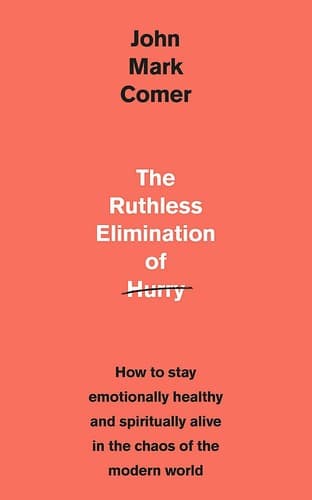
The Ruthless Elimination of Hurry: How to Stay Emotionally Healthy and Spiritually Alive in the Chaos of the Modern World
John Mark Comer
Why it's here: A pastor argues that hurry is a threat to life with God and suggests practices for slowing down.
Sermon Registry may earn a small commission if you buy through links marked “Affiliate link”, at no extra cost to you. It never decides what is recommended. How recommendations work
As an Amazon Associate I earn from qualifying purchases.
- ISBN
- 9780525653097
- Publisher
- Crown Publishing Group
- Language
- English
About this resource
What it’s about
John Mark Comer asks what constant hurry does to a person's capacity to love God and other people. Drawing on his own experience of ministry and exhaustion, he argues that the pace of a life helps shape the person living it. The Ruthless Elimination of Hurry connects spiritual distraction with the habits surrounding work, consumption, technology and rest, then looks to Jesus' way of life for a different pattern.
What to expect, and who it suits
The practical centre is four disciplines: silence and solitude, Sabbath, simplicity and slowing. Comer explains their purpose and brings them into ordinary decisions about attention, schedules, purchases and availability. The point of creating space is to become more present and responsive to God and people; the practices are means of making that possible.
Expect a conversational mix of personal story, biblical reflection and concrete experiments. The suggestions ask readers to notice how quickly they reach for stimulation or how much their commitments assume unlimited energy. The book is easy to read in stretches, but its practical questions need time outside the reading itself. Trying one practice and observing what makes it difficult is a useful way to engage with it.
This suits Christians who feel permanently rushed, readers whose devices consume the attention they want to give elsewhere, and church leaders questioning the cost of their working rhythm. It can also prompt a productive household or small-group conversation about shared expectations. Start with one change that fits your responsibilities, then ask what it makes possible and what resistance it reveals. The book's most useful contribution is a way to connect pace and spiritual formation, so that changes to a calendar have a purpose beyond making it look less crowded.