Esta página ainda não foi totalmente traduzida. Parte ou a totalidade do texto abaixo é apresentada em English, o idioma original.
FAITH inFORMATION - Jerome Part 3
First Baptist Church Of Savannah
Christians should honestly face the flaws of their history and tradition, since God works through imperfect people.
- Igreja
- First Baptist Church Of SavannahBaptistSavannah, United States
- Data
- Tempo de leitura
- 21 min
- Número de palavras
- 4.631 palavras
- Idioma
- inglês
Passagens bíblicas
Etiquetas
Categorias
Personagens bíblicas
Ideias-chave
Neste sermão▾
Starting with the End
Before we begin, it's important to say that Jerome was a human being who made mistakes, yet he was an incredible contributor to our Christian faith nonetheless. We're going to look at some things about Jerome today that are unsavory, and it is good to face them. The world already knows these things and can easily look them up. It does us no good as Christians to bury our heads in the sand about our traditions and our history.
We also have nothing to be ashamed of. We are vessels of clay, and God has chosen to use us and work in us as we are. Our sins, our problems, and anything we struggle with are not disqualifiers to Christian ministry or to being part of God's work in this world. Looking at the full and real Jerome makes God's faithfulness through him all the more miraculous.
A World in Decline
Jerome and Augustine were contemporaries, and they lived in a time very much like our own. The old order was passing away. When they were born, the Roman Empire was still strong, but by the time they died, Rome was in decline. That empire had reigned for some 500 years, far longer than the United States has existed. It is hard for us to imagine watching something like that crumble around us, culturally and religiously, as power shifted back and forth.
It makes sense that Jerome and Augustine tried to be bulwarks against what they saw as a possible crumbling of the Christian faith. My view is that they made some critical errors along the way, and Jerome definitely did. Yet they also did things that preserved the Christian faith and tradition, and we owe them a debt of gratitude.
Jerome's Evolution and His Friendships
Last week we covered Jerome's early life, so this week we focus on his relationships. In his letter 125 to Rusticus, he wrote:
"Make for yourself friends who will learn with you and share your tears."
By the end of his life, Jerome was a very different person from the young man we met earlier. Like many of us, he lived into his seventies, and the years of suffering softened him. He was no longer the firebrand of his early ministry. This matters especially as we talk about his views on women, which were in some ways sickening, yet paradoxically empowering. He opened opportunities for women that no one had offered before.
The Context: The Edict of Thessalonica
The Council of Nicaea hammered out what would become our permanent theology, what we call orthodoxy, and the canon of Scripture. But that did not settle things. The Arians were still going strong. After Constantine, emperors switched back and forth between Arian, pagan, and Christian rulers, and other controversies raged as well.
In 380, the Edict of Thessalonica became the law of the church and the land. Emperor Theodosius I wanted Nicene Christianity not only to be the orthodox belief of the church but the law of the realm. In a sense, this was the first form of Christian nationalism. The edict declared that the nations under the emperor's authority should profess the faith taught by the apostle Peter, and it named the Trinity as the faith to believe. Those who followed it could take the title of Catholic Christians. Others were labeled "foolish madmen" and branded heretics, forbidden to call their gatherings churches, and subject to divine condemnation and to the emperor's punishment.
So Christianity was now forced on people, and not just Christianity but one particular version of it. Pope Damasus, who protected Jerome, was one of his dearest friends and protectors, and he gave Jerome the cover he needed to translate Scripture directly from the Hebrew.
What did it mean to be a Christian at that time? Most believers followed the Council of Nicaea and accepted the Trinity, but the followers of Arius did not. There was no guarantee which kind of Christian would hold the throne. Emperor Valens, who died in battle in 378 after fourteen years in power, had been Arian, and that is why Theodosius wanted to fix the matter in a way that could not be undone. Some American Christians are trying to do something similar today. The edict was enforced with violence, penalties, jail time, and even death.
Jerome and Rufinus: A Friendship Ruptured
Jerome's first and best friend was Rufinus. They met as young men in Aquileia, in northern Italy, in the early 370s. They were part of what Jerome later called the "choir of the blessed," a small circle of Christian ascetics devoted to Scripture, celibacy, and communal piety. Jerome wrote of this period, "There was one soul in us and a single spirit that welded together our friendship."
This friendship ruptured, and it was devastating, embittering Jerome terribly. It began in boyhood, in the most innocent years of Jerome's life, when he was learning how powerful a close, intimate friendship within God's church and family could be. I would argue there is almost nothing closer than that, because you are joined together in spirit as well as in love. Their story is tragic because it began in deep spiritual kinship and ended in public theological warfare.
Both men studied under Origen, who was not their physical teacher but the one they read and learned from. Both loved and adhered to Origen's teachings, though that would later become a point of great contention. Rufinus traveled east to Egypt and then to Jerusalem, while Jerome went to Syria and became a hermit. They reunited in Bethlehem in 386, where Jerome founded his famous monastic community near Rufinus's own on the Mount of Olives. Rufinus was more philosophical, while Jerome was sharp and pithy, a tell-it-like-it-is fire brand who grew less philosophical over time.
Their friendship unraveled in the Origenist controversy, a theological dispute that swept through the Eastern church between 393 and 400. Origen's theology was accused of heresy, particularly his views on the pre-existence of souls and universal salvation. Rufinus, loyal to Origen, translated On First Principles into Latin, but he added a preface implying that Jerome shared Origen's ideas. Fearing guilt by association, Jerome reacted furiously. He published a counter-translation and unleashed a series of letters and pamphlets accusing Rufinus of dishonesty and heresy. In letter 84, Jerome wrote:
"You have falsified Origen to make him sound orthodox and then pretended I was your accomplice."
He followed with biting sarcasm: "When you translate Origen, you excuse his errors as if he were drunk. But when I translate, you accuse me as a heretic."
This dispute over translation should humble us deeply. All of this hangs on the translation of words. It is astonishing that everything we know of God is based on words that humans wrap around the mysterium tremendum, the great mystery. Yet it is also remarkably resilient. The faith has been passed down through the centuries, preserved, guarded, and loved. That is something to be proud of, but also something to remain humble about.
Jerome accused Rufinus of being "a viper in the bosom of friendship, one who strikes the hand that warmed him." Rufinus, for his part, replied: "I cannot imitate such violence. My conscience will not let me revile my brother." Rufinus was not as harsh as Jerome, who was known for not mincing words and for saying very cruel things about people. Rufinus simply could not bring himself to do it. Later in life, Jerome seemed to soften and express some regret for how he had spoken of him.
Jerome and Evagrius: The Philosophy of Translation
The next friendship is with Evagrius. Damasus was closer to Jerome for a longer period, but Evagrius matters because Jerome did not invent his ideas about translation on his own. He inherited them from Evagrius of Antioch, who wrote:
"A translation from one language into another that is phrased word for word conceals the sense of it."
Evagrius warned that word-for-word rendering chokes the seed with abundant grass, and that one must seek the meaning rather than snatching at syllables and letters. Jerome took this to heart and wrote, "I do not render a word for a word but a sense for a sense." This is why he was so controversial, and why people called him a heretic.
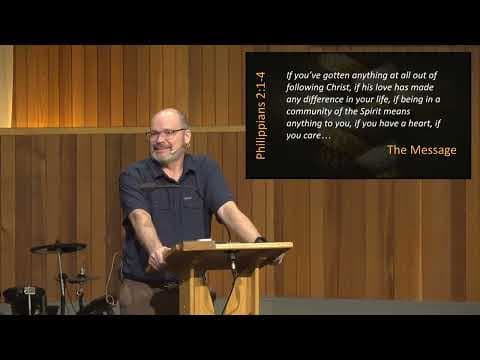
We can see a parallel in the controversy over Eugene Peterson's paraphrase, The Message, which we touched on last week. People love it or hate it because Peterson took liberties to convey a sense of the text rather than its precise wording. It can feel like commentary woven into translation, except the reader does not realize that is happening and often assumes every line is a word-for-word rendering, which they almost never are.
Jerome's friendship with Evagrius developed during his years in Bethlehem, roughly from 386 to 420. Evagrius was a wealthy Roman Christian who had settled in the Holy Land. He admired Jerome's scholarship and asceticism and became one of his most loyal supporters, financially and emotionally, when many others turned against him. Jerome wrote, "You have been to me not only a friend but a protector. In your house I find peace from many who pursue me."
Gnostic Roots of the Body-Hatred
To understand Jerome's views, we have to remember the filter through which he was reading everything. The Gnostics taught that we are mostly spiritual beings and that these mortal coils need to be shed. The body was seen as gross and disgusting, with no business in the spiritual life. That attitude shows up clearly in the way Jerome thought about human sexuality.
The Fight Over Celibacy
The context matters here. People were fighting for the supremacy of celibacy, especially among the clergy, and this was not yet an established norm. Priests, including Catholic priests at this time, had spouses, and that was completely normal. We know from the New Testament that the apostles themselves had spouses; Peter, for example, had a wife.
Jerome, however, was concentrating on the idea that marriage was not the highest form of Christianity or spirituality. He wanted to create a hierarchy of Christian spirituality. Yes, you could be a Christian as a married person, but you could not be this kind of Christian if you were married and sexually active, because you needed to be celibate to experience God in a pure form. That is very Gnostic.
Jovinian and the Backlash
This is why Jovinian drew such hatred from Jerome. Jovinian argued that baptized Christians who live morally receive equal reward whether they are married or virgins. He contested the hierarchy that placed virginity above marriage. His position provoked a backlash and was soon condemned by church authorities. Modern studies treat Jovinian as the catalyst for the debates that followed.
Ambrose argued that virginity had spiritual superiority, though marriage itself was not sinful. He wrote that he who gives his virgin in marriage does well, and he who does not give her does better. Jerome was famous for saying, "I love marriage because it gives me virgins." In other words, the only way to get people who will be virgins and pure is for them to come out of marriage, which is a strange way of praising it. Origen also advanced an allegorical approach to Scripture and praised virginity, and his legacy shaped many later thinkers. Augustine engaged the controversy a few years later with more pastoral nuance, defending the value of celibacy while affirming the goodness of marriage and criticizing excess.
Jerome's Missing Pastoral Years
It would have been good for Jerome to spend some years as a pastor. When he was ordained, he essentially said he would be ordained but would not work as a pastor. He wanted to go back to translating and creating theology for the church. Pastoral work changes you, because when you apply theology practically, human to human, it must change you. Pure theology imposed directly on everyday life does not work; it gets messy, and everyday life is simply too messy for that.
Jerome's Own Words on Virginity
Jerome famously attacked Jovinian's attempt to level marriage and virginity. If marriage and virginity are equal, he asked, why do the apostles praise virginity? In a letter to a young woman, Eustochium, he wrote:
I write to you, virgin of Christ, let sleep find you holding your Bible, and when your head nods, let it be resting on the sacred page.
He also wrote that it was an impious doctrine to consider a wife the same as a virgin, and asked how Rome could have refused to listen to such a claim.
This teaching becomes deeply troubling when we think about Mary, the mother of Christ, who bore God through her body. She is the only human being who ever held God in her body, and yet, especially among Protestants, we rarely talk about that. We spend more time on the wise men than on Mary bearing God in her body. Jerome could not handle bodies. That is ultimately what it comes down to. He was likely battling lust himself, as we saw in the desert when he was filled with lust and could think of nothing but the dancing women of Rome, and that struggle shaped how he taught others to carry themselves.
Asceticism and the Changing Role of Women
By the late fourth century, Christian life in the Roman Empire was being reshaped by two converging trends. One was asceticism, which praised sexual renunciation. The other was a wider social change in which elite women increasingly chose religious life and the study of Scripture. Together these made sexual renunciation, whether virginity or clerical celibacy, a live theological and social controversy rather than a private choice.
Jerome can come across as very misogynist, almost cruel, in how he talks about women's sexuality. But we must remember that women had little power. They were subject to their husbands and to society at large. When Jerome said that women did not have to get married, did not have to be owned by a man, and could belong to God and to themselves, that was an empowering message. They did not have to bear children, do housework, or give their bodies, energy, and time to someone else. For many women today, that message still resonates.
It is also worth saying plainly that the church has long extracted the resources of women: their labor, minds, intelligence, work, love, energy, and power, while giving them little or no credit. Jerome, by contrast, credited the women in his life. He named Paula, Eustochium, Marcella, and others in his works and gave them credit where it was due. So with Jerome and women, the picture is complicated. He was at times a misogynist and sexist, which I think reflected a kind of self-hatred, but he also loved, honored, and cared for women, and placed them as fellow contributors to his theology. He said, in effect, that he would not be where he was without these women.
The Roman Circle of Women
Newly arrived in Rome around 382, Jerome became a spiritual guide to upper-class Roman women who were drawn to asceticism. They flocked to him because he treated them with respect. He recognized that they had minds of their own and could learn alongside him as equals.
Others saw scandal. A single man living closely among widows and virgins, spending long hours with them behind closed doors and laboring over manuscripts together, did not look good. Yet no one, as far as I know, ever accused Jerome directly of impropriety. It was mostly whispers and innuendo, not specific charges. Jerome's rhetoric often reflected both his personal austerity and the broader misogynist tendencies that were part of the culture of his day. He did not invent them. And he saw sexual temptation as the greatest threat to holiness, which I find sad, because many people still see it that way, and it simply is not.
A Note on Honest Engagement
A reader might be confused by Jerome, and that is fair. A person can be deeply flawed and still be used by God. Jerome was truly a full human being, and God delights to work with imperfect people to accomplish God's purposes in the world. Scripture teaches that a double-minded man is unstable in all his ways, and Jerome was double-minded, which produced real instability in his teaching.
There is a better way to view human sexuality, one of wholeness. In that view, sexuality is one facet of our lives, not a hierarchy that places certain callings above others, and not the whole of who we are. People have struggled with this for centuries, and much of that struggle traces back to teachings like these. Those teachings still shape our lives and our churches today, for better and for worse.
Jerome on Women
Jerome's words on women were harsh. He advised avoiding painted cheeks and dyed hair, since such adornment is a snare of the devil. He praised marriage because it gave him virgins. He described women as soft, changeable, more easily led astray than men, fond of novelty and gossip, and quick to abandon virtue when tempted. He called a wife a drag on the free movement of a man's life. His views were complex and often paradoxical, and they must be understood within the context in which he lived.
A passage often attributed to him, though sometimes to Tertullian, who was also a misogynist, blames women for the fall: "You are the one who opened the door to the devil. You are the one who first plucked the fruit of the forbidden tree." Jerome, who greatly admired Tertullian, would likely have agreed with it. It is a sobering reminder of how deeply these attitudes ran.
Paula: Friend, Patron, and Collaborator
Paula was Jerome's dearest friend and, in the sense of spiritual companionship, his soulmate, not in a romantic sense. She was a wealthy Roman widow from one of the most distinguished families in the empire, fluent in Greek and Latin. After the death of her husband, Toxotius, she joined the ascetic circle around Jerome in Rome. She became his disciple, his closest collaborator, and his patron, paying for much of his work.
When Jerome left Rome after disputes with the clergy, Paula and her daughter Eustochium followed him to Bethlehem, where they founded a monastery and three convents. Paula embraced his teaching on asceticism so deeply that she abused her body and died as a result. At her funeral, people accused Jerome of pushing her to that point through his teaching that the body is the enemy and must be punished to reach spiritual enlightenment. Yet Paula continued as his spiritual companion, which suggests she shared his views. He was not victimizing her; she agreed with him and was very much his equal.
Paula and other women financed the Latin Vulgate that shaped how we read Scripture, and they financed all of Jerome's works. This reminds me of the women who financed Jesus's ministry. Women have always been deep wells of generosity, resource, strength, and love, and they have rarely received the credit. We do not know all the women who financed Jesus's ministry, but we know the women who financed Jerome's, because he named them. That matters enormously.
Jerome wrote after Paula's death, "Whatever I have learned, she desired to learn. Whatever she desired, I taught with delight." He saw her as both pupil and equal in the spiritual life, a rare acknowledgment of a woman in the fourth century. She funded the scriptorium and monastic complex at Bethlehem, copied manuscripts, assisted with proofreading, and helped him consult Jewish scholars for his Hebrew studies. She encouraged the translation from Hebrew that produced the Latin Vulgate, which became the standard Bible of the Western church. Jerome openly acknowledged her partnership: "She shared my labors, soothed my irritations, urged me to higher tasks. If my pen has drawn any truth from the fountains of Hebrew, it was because Paula stood beside me urging me to drink."
Eustochium: The Spiritual Daughter
Eustochium is often overshadowed by her mother, yet her relationship with Jerome was equally profound and formative. She was young when she met him, and in a sense she was his truest disciple. She became the bridge between Jerome's legacy and the next generation of Christian ascetic women.
Jerome wrote to her as a virgin of Christ, "the first flower of your mother's garden, the noblest shoot of the vine of Christ," urging her to keep grave companions, to let her tongue know nothing of idle words, and again to avoid painted cheeks and dyed hair. She helped with scriptural translation and proofreading, particularly of the Psalms, and she took on management of the monastic community, especially after her mother's death. She also played a critical role in correspondence and in preserving manuscripts, which is why we have Jerome's works today. Jerome described her diligence in lyrical terms: her lips were always moving in prayer, her fingers traced the lines of Scripture, and her soul was filled with the Psalms. He saw her as his spiritual daughter.
Paula's Death and Eustochium's Leadership
When Paula died in 404, Eustochium became abbess of the Bethlehem convents. Jerome's grief was immense, but he turned to her for consolation and continued collaboration. He told her she would inherit not her mother's wealth but her holiness, and that she had taken up her burden. As abbess, she oversaw three convents for women and the monastery for men where Jerome lived. She continued copying and preserving biblical manuscripts and corresponded with church figures in the West, keeping Bethlehem a center of Christian scholarship. In effect, she was a curator of Jerome's works, a secretary, and a diplomat, all in service of making sure his writings survived through the centuries.
Marcella: Jerome's Roman Awakening
If Paula and Eustochium represent Jerome's Bethlehem years, Marcella represents his Roman awakening, the beginning of his ministry to women and the source of both his inspiration and his original scandal. Marcella was a noblewoman from one of the city's oldest patrician families. Widowed young and left with much wealth, she devoted herself to prayer, charity, and study. She turned her lavish mansion on the Aventine Hill into a kind of monastery, a place where noble women gathered for Scripture, fasting, and theological discussion.
When Jerome arrived in Rome in 382, serving as secretary to Pope Damasus, Marcella quickly recognized his genius. She became his first female disciple and the catalyst for other women coming to him as a spiritual guide and teacher. She was the first person to take him seriously, but she was also the first to challenge his interpretations of Scripture, and he loved her for it. They corresponded back and forth, wrestling through the text together. He admired how her mind worked: "If I had to name the one among the Roman ladies most learned in the divine Scriptures, I would name Marcella. I could never open my mouth without her asking the meaning of each word, why it was said, and by whom. She would not rest content with surface knowledge."
After Jerome's exile, Marcella became the unofficial head of the Roman ascetic movement. She continued to lead Bible studies, counsel widows and virgins, and correspond with Jerome and other theologians. When her pupil Principia wrote to Jerome after Marcella's death, he described Marcella as a saint, a scholar, and a martyr of charity: "She lived in the flesh as though out of it. She possessed wealth as though she had none. She was humble in dress, austere in diet, full of charity to all."
The Controversy Over Women's Learning
The criticism of Jerome's relationships with these women was very real. Whispers circulated that he was too familiar with women and that his cell was never free from their visits. People said he taught noble women and corrupted them with his books, that he made virgins read the prophets. This suggests that the objection was not only to a man and woman sharing intimacy, but to women being educated at all. That was a major part of the problem, and Jerome did not back down.
Some clergy murmured that he had brought noble women to shame, leading them into an arrogant life of false sanctity. A historian later observed that, in his zeal for virginity, Jerome was imprudent, and that while he taught chastity, he seemed unable to escape suspicion of the very things he condemned. These charges followed him for the rest of his life. Rufinus wrote, "He boasts of his virgins as though they were his trophies. He praises their chastity as his own victory." He added, "Let him deny if he can that women have been the cause both of his glory and his shame."
The historian Elizabeth Clark put it this way: "The intensity of Jerome's friendships with women blurred conventional lines of spiritual and emotional intimacy, provoking clerical unease." People were simply not at ease with the spiritual closeness he shared with these women. And the consequences were both good and bad. Under Jerome's guidance, women like Paula, Eustochium, Marcella, and others studied Hebrew, Greek, and theology. They became the first generation of Christian women known for scriptural literacy. Jerome's partnership with Paula became a model of spiritual friendship, a deep mutual devotion ordered toward God rather than passion.
Some clergy murmured that Jerome had brought noble women to shame, leading them into an arrogant life of false sanctity. A historian later observed that in his zeal for virginity, Jerome was imprudent, and that while he taught chastity, he seemed unable to escape suspicion of the very things he condemned. These charges followed him for the rest of his life.
Rufinus wrote,
"He boasts of his virgins as though they were his trophies. He praises their chastity as his own victory."
He added,
"Let him deny if he can that women have been the cause both of his glory and his shame."
The historian Elizabeth Clark put it this way:
"The intensity of Jerome's friendships with women blurred conventional lines of spiritual and emotional intimacy, provoking clerical unease."
People were simply not at ease with the spiritual closeness he shared with these women. The consequences were both good and bad.
Fruits of the Friendships
Under Jerome's guidance, women like Paula, Eustochium, Marcella, and others studied Hebrew, Greek, and theology. They became the first generation of Christian women known for scriptural literacy. Jerome's partnership with Paula became a model of spiritual friendship, a deep mutual devotion ordered toward God rather than passion.
Later writers, such as Aelred of Rievaulx, cited Jerome as precedent. His female disciples renounced marriage and property, gaining independence and influence through religious vocation. Jerome defended their right to choose virginity against critics. Paula's monasteries at Bethlehem became a centre for biblical scholarship and pilgrimage, continuing long after Jerome's death.
The Costs
The friendships also brought negative consequences. Jerome lost his position and was exiled from Rome because of this enduring scandal. Although that freed him for greater study, it also became a catalyst for establishing the Bethlehem monastery, where some of his greatest works were produced.
He experienced public humiliation and lifelong grief at Paula's death. Yet that grief led to a deepened spiritual focus, and he produced many major theological works in the midst of these controversies.
A Different Way
Unfortunately, the controversy continues to provoke gendered hostility in the church, pitting men against women when it never should. Jerome showed us, through his partnership with women, a different way: men and women can be full partners in the spiritual life, working together intellectually, spiritually, and in close proximity with wholeness and goodness, without salacious or scandalous outcomes. They showed us what was possible.
Transcrição preparada com IA a partir da gravação original; pode diferir das palavras proferidas. Confirme na gravação antes de citar. Comunicar uma correção
Citar este sermão
Para lições, artigos e notas de estudo. Credita o pregador e a igreja e liga à gravação original.