Esta página ainda não foi totalmente traduzida. Parte ou a totalidade do texto abaixo é apresentada em English, o idioma original.
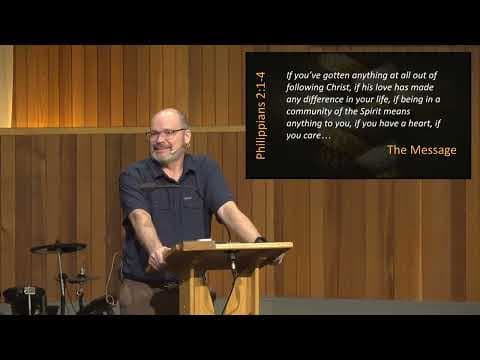
How Is A Community Built | Pastor Greg Ford Sermon | One Church Columbus
Finish Strong
Greg Ford · One Church
Doing your part in the community matters, even when the work is not glamorous.
- Pregador
- Greg Ford
- Igreja
- One ChurchOtherGahanna, United States
- Data
- Tempo de leitura
- 19 min
- Número de palavras
- 4.243 palavras
- Idioma
- inglês
Passagens bíblicas
Etiquetas
Categorias
Personagens bíblicas
Ideias-chave
Neste sermão▾
Finishing Strong and Why It Matters
This month we are in the book of Nehemiah, chapter 3, as part of a series called Finish Strong. There are two things I want you to look for throughout this message. The first is a very obvious application for our church right now, since we have projects that matter to our mission to serve God, worship God, and serve people. The second reaches far beyond this community to the responsibilities you have taken on in your family, your business or career, or a community project.
It is important to develop a pattern of finishing strong. It is not enough to start something well. Some people are good starters and poor finishers, and I want to give our children a different pattern. It is also part of our reputation in the community. We want to be people who finish well, not people who begin well and then lose steam.
Context: Nehemiah and the Broken Walls
Nehemiah shows up in the Persian Empire around 444-445 BC, and his book reads like his memoirs. In chapter 1 we meet him as the cupbearer to King Artaxerxes. That role was far more than bringing the king a drink. The cupbearer was entrusted with protecting the king from poison, which was one of the most common ways to try to kill an emperor. Historically, Artaxerxes' father was killed by his own bodyguard, so a king in that position would have good reason to trust only people who had fully proven themselves. Nehemiah had spent a lifetime being consistent and building solid character, and that is why he had proximity to the king.
Then Nehemiah learns from his brother that the walls of Jerusalem, about 700 miles away, are still a pile of rubble. They had been destroyed by a previous empire about 150 years earlier. This hit him hard for two reasons. First, the people were raising their children and families in a city that was unsafe, because the walls of a city represent protection. Second, the temple had been rebuilt about 70 years earlier, but its holy place was also a sitting duck with no walls to protect it. He was concerned for their safety, and he saw that they were living in disgrace. He was touched by a tangible need, safety, and an intangible need, disgrace.
His character is on display here. He was not only trustworthy but also a person of great empathy. It would have been easy to turn a blind eye to something 700 miles away, but he wept, sat down, mourned, fasted, and prayed. For four months he kept praying and came up with a plan: if God would open a door, he would leave his comfortable, good job and go to a city with no walls to fix a problem that could be fixed.
In chapter 2, the king notices him looking down and asks what is wrong. When Nehemiah explains, the king asks how he can help. Nehemiah asks for three things: permission, which only the king could give; safe travel, because without the king's name on a document he would likely be killed on the way; and timber, the tangible resources needed to rebuild the wall.
The Tangible and the Intangible
We see again the relationship between the intangible and the tangible, the supernatural and the natural. The kingdom of God is supernatural, but that does not make it intangible. Walls bring safety and protection, and they help rebuild a community.
If we are not careful, we can see something material and lose track of the deeply spiritual reality happening alongside it. James 2 makes this point:
"What good is it, my brothers, if someone says he has faith but does not have works? Can that faith save him? If a brother or sister is poorly clothed and lacking in daily food, and one of you says to them, 'Go in peace, be warmed and filled,' without giving them the things needed for the body, what good is that?" (James 2:14-16)
Faith without action is dead. God produces what only God can produce, yet throughout Scripture we are repeatedly invited to bring tangible resources and place them in God's hands to bring about extraordinary results. Sometimes the most spiritual thing you can do is put something physical in God's hand.
The Builders of the Wall
Chapter 3 names about 40 work crews, representing roughly a thousand people who took part in rebuilding these walls. None of the people who did the manual labor were professional builders. They were priests, Levites, local leaders, perfume makers, goldsmiths, and merchants. Some were supervisors who were competent in their own fields, but the physical work was done by people who did not do this for a living.
The Sheep Gate
Chapter 3, verse 1 says that Eliashib the high priest and his fellow priests went to work rebuilding the Sheep Gate. The Sheep Gate was the front gate of the city, the place where people entered. The text says they dedicated it and set its doors in place. That dedication matters. They held a ceremony to remember that this was not just walls or a pen for animals. It was part of their community.
We did something similar a few minutes ago when we dedicated children. Anyone who has raised a child knows every season brings its own challenges: nighttime feedings, dirty diapers, eventually temper tantrums. A lot of it is dirty work. In those moments we step back from the tangible and remember the intangible. We say, Lord, this work is holy. As a community we share in that ritual because we are supporting the parents, grandparents, and families who raise these children, since it takes a village. The dedication reminds us of our responsibility to help one another do this sacred task of raising people made in God's image toward their full potential.
The builders did not simply build the Sheep Gate and move on. They stopped to dedicate it, acknowledging that this was the Lord's community, a tangible wall and a tangible space, but about something more.
The Nobles Who Would Not Stoop
In verse 5 we read about the people of Tekoa. Their nobles would not put their shoulders into the work. The ESV says they would not stoop to serve their Lord. The citizens of Tekoa did the work, while the nobles refused to bring themselves under anyone else's leadership. This is the only place in chapter 3 where someone refuses to take part in the project. They felt it was beneath them.
Sometimes people opt out because they think, "That's not mine to do." Life is full of causes, and we have to discern what is ours to do. Other times people want to help but feel they have nothing to offer. I have been there myself. In college I had a car and drove people to church, but I had little money. I cut hair in the dorms for three dollars a haircut so I could buy cheeseburgers and gas. At that church, during the offering, people would hold up an envelope to the Lord. I had no money, so I would grab empty envelopes and pray, "Lord, someday, fill this up." I know what it feels like to be in a place where you cannot give because you are fighting for your life, with no energy, time, or money. This is not about shaming anyone for that.
The nobles of Tekoa were different. They had resources and were in a position to act, but they refused to stoop down and do the work. Verse 27 shows what the people of Tekoa did next. They repaired another section across from the great projecting tower. They picked up the slack for their leaders and went above and beyond, rebuilding a section on the other side of the community as well.
This reminds me of a message our youth pastor, Brady Black, preached a few weeks ago from the apostle Paul's teaching on the body. Paul describes many parts with different functions, all working together, and the hand cannot say to the eye, "I do not need you." The eye is remarkable, and it is easy to think of ourselves as the big toe that only gets caught in the blanket, insignificant and unable to move the needle. Some people do not engage because they think their contribution is too small. They say, "If I had more, I would do more." But communities are built by good citizens who say, "I may not be able to do everything I wish, and some things I will be able to do someday, but today I will do my part, and I will be proud of it."
When people do not participate, the community becomes off-kilter, and someone has to pick up the slack. There is a hole in the wall with my name on it, and I do not want that. I may not be able to do everything, but I am not too proud to put my shoulder into the work. Thank God that in chapter 3, only one group refused, and others came and picked up the slack.
So I want to encourage you today: do your part, whether you think your contribution is significant or not. Whether it is here in these projects or whatever God has called you to outside these walls, do not diminish your work. Step up and do it, and do not become one of these people who is too proud. There is a quote I have heard, and I do not know who first said it: "If you're too big to serve, you're too small to lead." The nobles of Tekoa had grown so big in their own minds that they would not stoop down to serve their Lord.
Shallum and His Daughters
Nehemiah 3:12 says that Shallum son of Hallohesh and his daughters repaired the next section. He was the leader of half the district of Jerusalem. Notice what Nehemiah records: Shallum worked, and he brought his daughters with him. In our world that may not seem unusual, but in their culture at that time, daughters did not do manual labor.
Shallum and His Daughters
Nehemiah 3:12 says that Shallum son of Hallohesh and his daughters repaired the next section. He was the leader of half the district of Jerusalem. Notice what Nehemiah records: Shallum worked, and he brought his daughters with him.
In our world that may not seem unusual, but in their culture at that time, daughters did not do manual labor. This was so abnormal that Nehemiah captured it, documented it, and made sure we are still talking about it.
"Shallum son of Hallohesh and his daughters repaired the next section. He was the leader of the other half of the district of Jerusalem." — Nehemiah 3:12
Look at the contrast. Shallum was also a noble, a leader. So you have the nobles of Tekoa, who would not throw their shoulder into the work because they were too good to stoop, and then you have Shallum, who says, "I understand the work that's being done here, and not only am I going to do it, I'm bringing my daughters with me." That may not be culturally acceptable or socially appropriate to everyone, but he understood the opportunity. He wanted the community to see his daughters doing this work.
Imagine being one of Shallum's daughters. Your culture tells you what you can and cannot be, and you are standing next to your dad while he shows you how to do the work. He puts the brick on, and you say, "I can't lift that," and he says, "Yes, you can." And you put that brick on the wall. When the community is secure because the wall was built, how many times do you think you pointed to a section and said, "I did this part"?
Shallum's daughters were learning their own capability. They were learning how to be good citizens of the community, and they were learning that nobody was going to define who they were. Shallum, a noble, made a statement to the world: he took his daughters to another district and let everyone see it, and it became part of their formation.
A Card, a Child, and a Widow's Mite
Last week we asked everyone to pray about what they could do over the next twelve months to help us finish strong on these projects. We need the help, and we asked everyone to respond. Several cards came in, and two of them were especially meaningful.
The first came from a six-year-old child in our church who gave $1.65 to the project. The second came from someone whose age and name we don't know, who gave $6 and wrote, "Thank you, God, that I'm able to give."
This reminded me that, yes, there is a bill to be paid and there is square footage to be built, but this is not really about buildings and square footage. Think about that child. That $1.65 is going to help build relationships, learn about God, and learn about themselves in a room. One day they will sit there and think, "I helped pay for this." That is wonderful.
I love that the child has skin in the game. The child says, "I'm going to be a part of this." The other person said, "I wish I could do more, but I'm going to give my $6." It may not move the needle in your eyes, but it is moving them. Thank God for the ability to give. When we break ground, and when they see the spaces work and do what God designed them to do, they will know they had a part in it.
The Dung Gate
Verse 14 is where this gets interesting: "The dung gate was repaired by Malkeia, the leader of Beth-Haccherem district. He rebuilt it, set up the doors, and installed the bolts and bars."
You can probably figure out what the dung gate is. It was the back door of the city, where human waste and household refuse were carried out. In 400 BC there were no sanitation crews collecting trash from the curb and no flushing toilets. Everything from last night's leftovers to broken pottery was collected in a container, and someone had to carry it to the dung gate.
Someone had to do that job. Who did it? Malkeia did. Who was Malkeia? He was a noble, the leader of Beth-Haccherem, and that district was nowhere near the dung gate. He could have stayed home and said, "Somebody else will do the dung gate. I'm a noble. I don't put my shoulder into such work. I don't stoop to that level." He could have sent someone who worked for him. Instead, he said, "Give me the dung gate. Somebody has to do it."
What it takes for a community to be the kind of community any of us would want to live in is that everybody does their part. Nobody leaves a hole in the wall with their name on it. Some people go above and beyond. Sometimes above and beyond means the citizens of Tekoa picking up the slack for their leaders. Sometimes it means the king's officials doing something only they could do. Sometimes it means working in a district other than your own, and many people worked across the street from their own homes. And sometimes it means doing the dirty work that nobody gets a trophy for and nobody is proud of, but that still needs to be done.
Three Kinds of Citizens
When you look closely at Nehemiah 3, three categories of citizen come to the surface. Many did their part. Some went above and beyond. A few did nothing.
At some point, we all have to decide which one we will be. In any project, and in anything in your life, you have to ask yourself, "Am I going to be the person who does my part?" Some things will simply call for you to do your part. At other times you will sense God tapping you on the shoulder and saying, "I need you to pick up the slack over here. For one reason or another, these people did not do what they were supposed to do, and we cannot have a hole in the wall. I am asking you to go the extra mile."
You have to decide whether you are willing to stoop and put your shoulder into the work. Of course, some things are not yours to do, and that's fine. But when God calls you to something, you must choose which category you want to be in.
Next To Them
One of the best literary elements in Nehemiah 3 is that fifteen times it says, in English, "next to them" or "next to him." As the text moves around the wall from verse to verse, forty work crews are described: this person worked next to that person, who worked next to someone else. The Hebrew words are le'yadō and yad, and the picture is that they worked hand upon hand. It does not literally mean they were holding hands. It gives us a visual image: as this person worked next to that person, the work itself, the building of the wall, became the community mortar.
Think of a brick wall. If you were to put Nehemiah 3 into a picture, it would look like a brick wall, with people as the bricks and the work as the mortar. The wall is a metaphor for the deeper work. Building the wall gives a tangible structure and solves a real problem, because it gives security so people can live safely in the city. But the greater work is building the community. Because they did it the right way, one brick worked next to another, and the work itself brought them together.
This has been my prayer since day one, before we moved a speck of dirt. Lord, I believe these walls are going to be built. It is not a matter of whether we will build; it is a matter of whether we will build the right way. I have been praying every step of the way through inflation, delays, and all kinds of challenges. Anything worth doing usually has challenges, and I will get into some of that next week. My prayer has been, "Lord, would you use every part of this to be about much more than square footage? Keep us focused on building this community. As we build these buildings, Lord, would you build us?"
A Generous Man Who Let Go of Fear
To finance this project, we had to borrow some money and pay some of it in cash. There was one part we could not borrow for, our children's classrooms, and we were short. I reached out to a man and said, "I have no idea if this is a good time for you. Feel free to tell me no, but we need help. Can you do something?"
He walked the property, looked at the work, and said, "I'm going to help." I said, "Thank you so much. Take some time and pray about it." He said, "I don't even need to. I've been praying about it already, and I know what I'm going to do." What he told me made it possible to finish the work. I wanted to thank him on behalf of all of us and all of our kids, and I didn't have words big enough.
Then he said something I will not forget. He told me that sometimes he feels like he knows too much. He watches what is happening around the world, and his business is affected by global politics and the global economy. He has worked his whole life to earn what he has, and he has reached a place where he has a lot. But when he looks at the world in front of him, he gets scared. In his fear, his instinct is to hold on to everything and hide behind it.
He said, "I have been praying, Lord, help me with this fear." And God spoke to his heart: do not do what your instincts are telling you, which is to become a hermit and put up walls, me against the world. When he becomes afraid, he becomes a terrible community member because he forgets everyone else and thinks it is every man for himself. He takes everything he has and uses it only for himself. God has been challenging him: the only way past this fear is to become a great community member, to stop forgetting the community and start giving to it.
He said, "I knew I needed to do something tangible so that fear would lose its grip on me and I would not forget that I am part of a community. God did not create me to isolate myself, bar the doors, and barely make it through. God created me for connection, and my fear has been holding me back. So I asked God to give me something tangible I could do as part of my formation."
I stepped back and thought, "God, thank you for letting me stand right here, right now. It doesn't get any better than this." I know the kids will be blessed and the spaces are needed, and the work will be done well. But I was watching a man say, "This is part of my formation."
In the volatility of the world we live in, many of us can relate to his position. There is a fear that asks, "What about me?" When I invest in the community and say, "I have something to give right now, but what happens if I don't? Will the community be there for me?" Being a community requires reciprocity. That is why projects like this matter. Often a group of individuals who are not connected can become connected if we do this the right way. God will use even the tangible work to do the intangible work.
Living Stones
The walls are important because they are environments, but they are not nearly as important as the building of people and the building of community. Look at what Scripture says. First Peter 2:5 says:
"You also, like living stones, are being built into a spiritual house to be a holy priesthood, offering spiritual sacrifices acceptable to God through Jesus Christ."
Ephesians 2:19-21 says:
"You are members of God's family. Together we are his house, built on the foundation of the apostles and the prophets, and the cornerstone is Christ Jesus himself. We are carefully joined together in him, becoming a holy temple for the Lord."
And First Corinthians 3:9 says:
"For we are co-workers in God's service. You are God's field, God's building."
We cannot manufacture God's results, but we can resource God's work. We all know that money cannot transform or change a heart. But money can help build a space and a room, and it can facilitate the work of God, where someone finds Jesus, and he is the one who transforms a heart.
So here is how I want to end today. I want to invite you to stand on your feet. At some point this month, whether today or soon, either in person or online, would you fill out the card? The more communication you give us, saying, "Here's what I plan to do over the next year," the more helpful it is in helping us make wise decisions and do what God has called us to do.
Ephesians 2 tells us we are being built together. We are not a loose collection of individuals; we are members of God's household, joined together into a holy temple for the Lord.
"You are members of God's family. Together we are his house, built on the foundation of the apostles and the prophets, and the cornerstone is Christ Jesus himself. We are carefully joined together in him, becoming a holy temple for the Lord."
Paul reminds us in First Corinthians 3:9 of the same truth:
"For we are co-workers in God's service. You are God's field, God's building."
Resourcing God's Work
We cannot manufacture God's results. Only God can change a heart. But we can resource God's work. Money cannot transform anyone, yet it can help build a space and a room where the work of God takes place, where someone finds Jesus, and where he transforms a heart.
A Call to Respond
So here is how I want to end today. I want to invite you to stand to your feet. At some point this month, whether today or soon, and whether in person or online, would you fill out the card? The more you communicate with us, saying, "Here is what I plan to do over the next year," the more helpful it is in helping us make wise decisions and do what God has called us to do.
Joining Hands in Community
As a closing act of community, I invite you to reach across the aisle and take the hand of the person next to you. Hand upon hand is community mortar, and if we cannot hold hands here, we will never hold hands anywhere. This is a moment to stop, slow down, and offer ourselves to God, both as a community and in the many areas of life beyond this place.
Transcrição preparada com IA a partir da gravação original; pode diferir das palavras proferidas. Confirme na gravação antes de citar. Comunicar uma correção
Citar este sermão
Para lições, artigos e notas de estudo. Credita o pregador e a igreja e liga à gravação original.