Esta página aún no se ha traducido por completo. Parte o la totalidad del texto siguiente se muestra en English, su idioma original.
Speaking and Boasting: The Power and Responsibility of Words
James 3:1–4:17
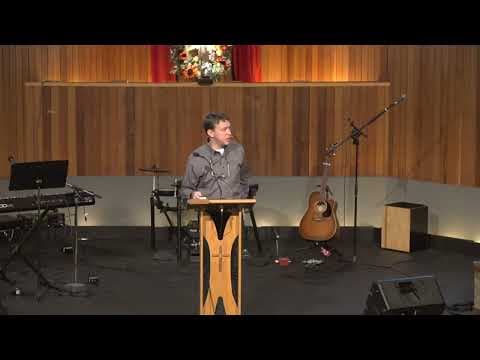
Rev Sione Leaaetoa · Mount Pleasant Uniting Church
Our words are powerful and can guide relationships, families, and churches; we must speak words that bring life rather than tear down.
- Predicador
- Rev Sione Leaaetoa
- Iglesia
- Mount Pleasant Uniting ChurchOtherMount Pleasant, Australia
- Fecha
- Tiempo de lectura
- 9 min
- Número de palabras
- 1831 palabras
- Idioma
- inglés
Pasajes bíblicos
Etiquetas
Categorías
Personajes bíblicos
Ideas clave
En este sermón▾
The Power of Words: Speaking with Humility and Grace
Introduction
This morning we continue our study of the practical book of James. Over the past few weeks, we've explored testing and persevering, listening and doing, and faith and works. Today, James brings these lessons close to home by turning our attention to something that affects every one of us: our words.
James spent considerable time discussing the tongue—what we say, how we say it, and what our words reveal about us. This matters deeply because words are incredibly powerful.
Consider a time when someone said something encouraging to you: "I believe in you," "I love you," "You're doing a great job," or "I'm praying for you." Those words likely still stay with you. Conversely, harsh words can wound us for years. A careless sentence can wound deeply. A rumor can destroy a reputation. An angry word can damage relationships.
James teaches us three essential truths this morning: the power of our words, the heart behind our words, and the humility that should shape our words.
Part One: Our Words Have Great Power
James begins chapter three with vivid pictures to show us that small things can have enormous impact.
First, he speaks of a bit in a horse's mouth. A horse is large and powerful, yet a small bit can guide it wherever we wish.
Next, he describes a ship. Ships may be enormous and driven by strong winds, yet a small rudder determines their direction.
Then comes the image of fire. A tiny spark can set an entire forest ablaze.
James' point is clear: small things can have huge impact. Our words are similarly small, yet they guide the direction of our relationships, our families, our churches, and sometimes our entire lives.
Consider what a great forest is set on fire by a small spark.
One comment. One email. One text message. One conversation in the car park. One post online—and suddenly something that seems small becomes very big. Words are powerful; they travel quickly. And once spoken, we cannot always take them back. We have all wished we could reach out and grab words we have spoken, put them back into our mouths. But we cannot.
The Tongue Cannot Be Tamed
James makes a staggering statement:
No human being can tame the tongue.
James is not saying we should stop trying to control our tongues. Rather, he reminds us that controlling our words requires spiritual maturity and God's help. Left to our own devices, it is genuinely difficult.
The Great Contradiction
James then highlights one of the greatest contradictions in our lives:
With the tongue we praise our Lord and Father, and with it we curse human beings who have been made in God's likeness.
Think about that for a moment. We come to church on Sunday and sing, "Hallelujah, praise the Lord, we love you Lord." Later, we use the same mouth to criticize somebody, to tear somebody down, to gossip about someone. With the same mouth that praises the Lord, we speak harshly to someone we love.
James says:
My brothers and sisters, this should not be.
Why? Because the person we are speaking about is made in the image of God.
This does not mean we never disagree. It does not mean we never confront something that is wrong. But even when we disagree, our words should reflect the character of Christ.
Before we speak, perhaps we should ask ourselves: Is it necessary? Is it true? Is it loving? Will these words build up or tear somebody down?
Sometimes the most Christ-like thing we can do is speak. We are given a mouth to speak, so we need to speak. But sometimes the most Christ-like thing we can do is actually remain silent and listen more.
Part Two: Our Words Reveal What Is in Our Hearts
James moves from the tongue to something deeper. The real problem is not simply our mouths. The deeper problem is what is in our hearts.
Jesus teaches us:
A good man brings good things out of the good stored up in his heart, and an evil man brings evil things out of the evil that is stored up in his heart. For the mouth speaks what the heart is full of. (Luke 6:45)
Our words often reveal what is going on inside us. What is in our hearts.
James says:
But if you harbor bitter envy and selfish ambition in your heart, do not boast about it or deny the truth. Such wisdom does not come down from heaven, but is earthly, unspiritual, and demonic.
Two Kinds of Wisdom
James describes two different kinds of wisdom.
The wisdom from above is:
- Pure
- Peace-loving
- Considerate
- Submissive
- Full of mercy and good fruit
- Sincere
The earthly wisdom is marked by:
- Bitter envy
- Selfish ambition
- Conflict
- Pride
The question becomes: What kind of spirit is shaping the way we speak and live? What kind of spirit is in our heart?
James asks: "Where do our arguments and quarrels come from?" His answer is uncomfortable.
They often come from desires that battle within us.
Many conflicts are not simply about the words we speak. They are about something deeper that we want. It is our sinful nature. We want to be right. Maybe we want control. Maybe we want recognition. Maybe we want people to agree with us. Maybe we want to win. Sometimes our words become weapons to get what we want.
Humility Changes Everything
This is why James says:
Humble yourselves before the Lord, and he will lift you up.
Humility is crucial here, because humility changes the way we speak.
A humble person can listen. A humble person can admit, "I messed up. I was wrong. I'm sorry." A humble person does not need to win every argument. A humble person does not need to have the last word. A humble person can disagree without destroying another person.
James urges us:
Brothers and sisters, do not slander one another.
This is very practical for us as a church. Church communities are made up of people—all different people here. Different personalities. Different expectations. Different ideas. Different theological positions. Different generations. Different ways of doing things.
The challenge is not whether disagreement will happen. It will happen. The challenge is how will we speak to one another when we disagree?
- Will we talk about people or will we talk to people?
- Will our words create division or reconciliation?
- Will our words make the problem bigger or bring peace?
Part Three: Speak and Live with Humility Before God
Toward the end of chapter 4, James turns to another form of speech: boasting.
He says:
Now listen, you who say, "Today or tomorrow we will go to this or that city, spend a year there, carry on business and make money."
There seems to be nothing wrong with planning. Planning is actually good. We all make plans—for holidays, for work, for ministry, for the future. That is a good thing to do.
James is not arguing against planning. He is arguing against planning without God. It is being arrogant, thinking "I can do that by myself." It is boasting.
The Brevity of Life
James then asks:
Why do you not even know what will happen tomorrow?
And he gives us a powerful image:
What is your life? You are just a mist that appears for a little while and then you vanish.
We are born and given time to live, and then we depart. James reminds us that we are limited beings. We have limitations. Sometimes we like to think we are in control. But life has a way of reminding us that we are not.
Plans change. Circumstances change. Health changes. You might be healthy one moment and face illness the next. Relationships change. Opportunities change. Life changes.
Instead of being boastful or arrogant or trying to run our lives, James says:
If it is the Lord's will, we will live and do this or that.
It is about the attitude of the heart. It means saying, "God, my life belongs to you. My plans belong to you, Lord. My future belongs to you."
You can plan. You want to do this; it is your desire. You want to plan for your family. But hold those plans with open hands, because God is in control, not you. You are in control.
That is humility. That is not boasting. That is not arrogance. That is acknowledging that God is in control.
Humility Transforms Our Speech and Plans
Humility should shape not only our plans, but also our words.
Instead of boasting about what we will accomplish, we acknowledge our dependence upon God. Instead of saying, "Look, look at what I have done," we learn to say, "Look at what God has graciously allowed me to do."
James reminds us that our life is short and not in our control. But the opportunities God has given us are precious. And the words we speak matter.
Perhaps we should ask: What kind of words do I want to leave behind? What kind of words do you want to leave behind to your loved ones?
- Words of criticism?
- Words of anger?
- Words of pride?
Or:
- Words of encouragement?
- Words of hope?
- Words of grace?
- Words that point people toward Jesus?
Conclusion: Words That Bring Life
This is the touching challenge for us this morning, church. Consider what kind of words you want to leave behind.
Before you speak, before you send out that email, before you send out that text, before you post that comment, pause and ask the question: Will these words bring life?
Proverbs reminds us:
The tongue has the power of life and death.
We have an incredible opportunity as the body of Christ. Every day we can use our words to bless. We can use our words to encourage someone, to comfort someone, to reconcile, to build up, to share hope, to tell someone that they matter. We all have that capacity. We can all do that.
As followers of Christ, let us be that people whose words sound like Jesus. Sound like Jesus.
So that is the challenge for us this morning: Will these words of mine bring life? Or will they tear somebody down?
Prayer
Our Father, we thank you, Lord, for the gift of words. Our Father, forgive us for the times we have used them carelessly, harshly, or selfishly. Forgive us for our pride, our arrogance, and our boasting, Lord.
Lord, would you give us wisdom to know when to speak and when to remain silent? Guard our mouths and transform our hearts. Lord, help us to speak words of encouragement, grace, truth, hope, and peace. Give us humility in our relationships and in our plans for the future, knowing, Lord, that you are in control and our life is limited, Lord.
May our words reflect Jesus and bring life to those around us. In his name we pray. Amen.
Transcripción preparada con IA a partir de la grabación original; puede diferir de las palabras pronunciadas. Consulte la grabación antes de citar. Comunicar una corrección
Citar este sermón
Para lecciones, artículos y notas de estudio. Reconoce al predicador y a la iglesia y enlaza la grabación original.