The living archive is loading.

Continue exploring
Connected by scripture or shared themes.
Continue exploring
Connected by scripture or shared themes.
Your funding and generosity provide support for 120 to 200 churches being planted. You are part of a movement transforming entire regions. If you came into church today thinking you'd just go through the motions, know that you are participating in something that reshapes communities.
I carry a picture in my Bible from one of our anti-trafficking programs. It shows 37 young girls identified by a survivor-led program—girls for whom it was too dangerous to return to their communities. Instead, they were offered a choice: "Stay here and pick any vocation you want, and we're going to help you get there."
Today, 11 of these women work in hotel and hospitality, six in business and marketing, four in social work, one is finishing her teacher's license, and another is in medical school to become a doctor. Four have entered full-time church vocations. All of them were baptized this past year. Free people free people. They will return to their communities and share hope because the gospel doesn't stop at freeing us—it invites us to free others physically and spiritually.
I hate running. I don't think you understand—I truly hate running. I don't believe in runner's high. But you know what I hate more than running? Girls being trafficked. So sometimes you just do things afraid and do difficult things.
When my friend invited me to run "the Great World Race," I thought it sounded great until I learned it was seven marathons on seven continents in seven days. I didn't even think that was possible.
I told myself that if I could at least get the Antarctica marathon done, I'd have my party story for life. We were all in Cape Town—60 of us running together, four on my team running for adventure and anti-trafficking. One of my teammates did all seven marathons on one leg. She's a cancer survivor. Don't self-select out of what God is calling you to do.
Then we got the message: "It's too dangerous to land in Antarctica." Instead, we squeezed in a marathon in Cape Town that morning, showered in three hours, and got on a plane to Antarctica for our second marathon the same day. I had about 20 minutes of sleep between them.
When I stepped out onto the tarmac in Antarctica, it was terrifying. I'm from Minnesota—I thought I was built for this. I was not. We did the marathon anyway in negative 22-degree weather. Afterward, I was crabby and tired, wanting nothing more than a shower and sleep. But there was no time. Sixty of us, after two marathons with no shower, got on a plane for a 10-hour flight to Australia. Our bodies were like petri dishes. Things were happening that shouldn't happen.
By the time we landed in Australia, we faced a 110-degree temperature swing and a third marathon in 36 hours. One marathon, I forgot my shoes on the plane and had to run in brand new ones—not ideal. But when we finished, the community surrounded us. We had doubled what we set out to raise, bringing in over a million dollars to rescue girls and share the gospel's hope.
Rescuing girls from trafficking represents the heart of the gospel. The gospel invites us to become free ourselves. It frees us, and it doesn't stop there. Then it invites us to be part of freeing other people—physically and spiritually. It invites us into a life that will often be more sacrificial and require us to do difficult things on behalf of others.
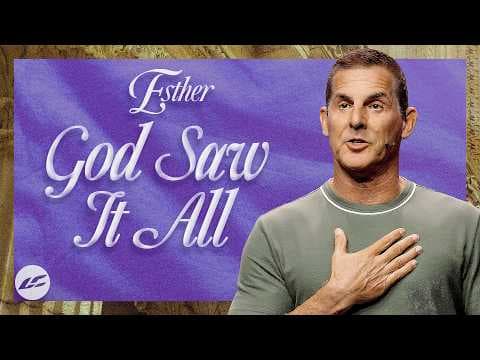
We're in a series called The Great Cloud of Witnesses—52 weeks looking at 52 central characters in scripture. These characters help us understand the grand meta-narrative leading to Jesus and help us find ourselves in God's story.
The character we're examining is Esther, one of my favorites. I was hooked on her story in middle school and high school. She's powerful and complicated—fully human. She has hesitation, anxiety, and fear. She's a reluctant leader. Yet God uses her, and she literally frees an entire group of people from extinction, pushing the narrative of all of scripture forward through her courage.
When I face things I'm afraid of, hesitant about, or reluctant to do, Esther's story gives me not only inspiration but instruction.
We're looking at Esther 4:9-17—eight verses that contain the core conversation helping us understand the entire book.
The king, King Ahasuerus, is frustrated with Queen Vashti, so he banishes her and sets up pageants to find a new queen. Now, just because something is in the Bible doesn't mean the Bible condones it. But then Esther appears—originally named Hadassah. She becomes queen. Her cousin Mordecai, who acts as a father figure and adopted her, unearths a plan to eradicate all the Jews, orchestrated by Haman, the king's adviser.
Mordecai tells Esther, "You are positioned to do something about this." Esther responds, "I don't know. It's a pretty good gig just hanging out in the palace." There's back and forth between them, and spoiler alert: she finds courage despite her fear, goes to the king, her people are saved, and Haman is killed on the very apparatus he meant to use to kill the Jews.
Hathach, an advisor to Esther, goes back and reports what Mordecai had said. Esther instructs him to tell Mordecai:
"All the king's officials and the people of the royal provinces know that for any man or woman who approaches the king in the inner court without being summoned, the king has but one law: that they be put to death unless the king extends the gold scepter to them and spares their lives. But 30 days has passed since I was called to go to the king."
Esther's words are reported to Mordecai, and he responds:
"Do not think that because you are in the king's house, you alone of all the Jews will escape. For if you remain silent at this time, relief and deliverance for the Jews will arise from another place, but you and your father's family will perish. And who knows but that you have come to your royal position for such a time as this."
Esther replies:
"Go gather together all the Jews who are in Susa and fast for me. Do not eat or drink for 3 days, night or day. I and my attendants will fast as well, and when this is done, I will go to the king even though it is against the law, and if I perish, I perish."
Mordecai goes away and carries out all of Esther's instructions.
Esther goes from being fearful and paralyzed to stepping into faithfulness. Even though she's afraid, God still uses her. We might read this like we'd watch Star Wars or The Bourne Identity—thinking, "That's cool, but that's not me. I'm not royalty." But the reality is we all face difficult decisions. Just like Esther moved from paralyzed fear to action, we can too.
Looking at Esther's journey, there are four steps—and conveniently, they start with the letter C in Hebrew: recognize Crisis, seek Counsel, engage Community, and take Courage.
Esther recognizes she is in crisis. She says, "If I go before the king and he doesn't like it, he can kill me." That's a life-or-death crisis. But if she risks going, maybe she saves her people. She's stuck in the tension: What do I do?
Most of us don't face decisions that feel quite so consequential. Yet when you look at crisis broadly, we all face decisions where whatever we decide, it matters.
Erik Erikson, a voice in modern psychology, defines crisis like this: "An inevitable turning point in your story." It's not necessarily good or bad—it's simply inevitable.
Right now, many of you are in crisis moments:
While we examine what Esther did in her inevitable turning point, consider: What is the crisis you are facing?
It might be parenting, marriage, mental health, medical issues, or simply a choice: Do I sell my house? Do I quit my job? Do I take this opportunity? Do I have this conversation? Do I share the hope of the gospel?
Esther faced a life-or-death crisis, but beneath it lies an existential question we all must answer: Are we willing to give up some of what we have so that others can thrive?
Esther had to give up the safety and security of living in the palace, undetected and comfortable. Yet God invited her to be part of something bigger and better. She had to answer: Would I be willing to give this up for other people?
We face the same question.
One of the things we say at Venture is this: "Moving from comfortable to less comfortable on behalf of other people." This goes against our common logic. We don't naturally want to willingly leave comfort so others can thrive.
That's why I ran the race. I hate running. But it wasn't just uncomfortable for me—it was uncomfortable for my family. We had to adjust our calendar, address our weaknesses. This is a deeply biblical concept.
In Philippians 2:6, the writer describes Jesus: He was fully God but did not consider staying in heaven the most important thing. He willingly came down to help us, rescue us, and speak to our pain and brokenness. In the same way, we're sometimes invited to step away from what's most comfortable, to step into something else on behalf of other people. The promise is that on the other side, you'll actually be more fulfilled.
John 10:10 says He wants to give you life and life to the full by inviting you into what He is doing.
I see this in our partners who literally risk their lives to give food to others. I see it in survivors who willingly choose to go back into brothels—while pimps punch them—to rescue girls. The decision to move from comfortable to less comfortable, to do things afraid because somewhere inside you know that the God of the universe is inviting you to something more.
Esther thinks about this crisis, but it's such a tough decision. Some of us know we must do something, but we lack the courage to do it or need input on how to proceed and what's at stake.
So Esther seeks counsel from Mordecai. He's not the nicest—he certainly doesn't candy-coat this:
"Don't think that because you're in the king's house that you alone of all Jews will escape. For if you remain silent at this time, relief and deliverance for the Jews will arise from another place, but you and your father's family will perish. And who knows but that you've come to your royal position for such a time as this."
This is heavy-handed. Mordecai essentially says: You can stay silent and keep the status quo, but you will die. You can do nothing, but you will miss out.
As we sit here in the Indianapolis and Carmel area, there are comfortable, nice things around us. The invitation is: If you keep doing this, you might miss something so much better.
When facing a crisis, we often know something must be done, but we lack either the courage or the clarity to act. Esther doesn't try to figure this out alone—she seeks counsel from Mordecai, who doesn't soften his words.
Mordecai tells her plainly: if she remains silent, relief will come for the Jews through another means, but she and her family will perish. He's essentially saying: you can stay the same, but you will die. You can do nothing, but you will miss out.
As we live in the greater Indianapolis and Carmel area surrounded by comfort and nice things, the invitation is real: if you keep doing what you're doing, you might miss something so much better.
Change happens when the pain of staying the same is greater than the pain of change.
Initially, we feel excited about our spiritual journey. Then we settle back into what is comfortable, until one day we become so agitated that we think, This is not what I signed up for. The reason is because God is whispering and inviting you to more. Spiritual apathy and lethargy set in when we ignore God's invitations. We settle into an existence that falls short of life and life to the full.
I had a friend who was a D2 basketball player—the big man on campus. One day his arm swelled to three times its normal size. He ignored it for three days until a doctor diagnosed him with thrombosis, a blood circulation problem. Whenever he'd raise his arm to play basketball, the very thing he loved was slowly killing him. He had to give up the sport.
Today, he's one of the greatest pastors, impacting thousands of people. He didn't know it then, but the thing giving him so much life and value was keeping him from something better. I don't know what's keeping you back—whether it's a relationship, anger, a behavior pattern, a job, or money. What I know is that God's word invites us to take steps that might scare us, but on the other side will give us life.
Who is the wise counsel in your life who will tell you the hard truth?
We don't all have therapists, but we do have a community of wise people. This is why we emphasize groups so much—there are people who have already walked through what you're going through now: marriage struggles, teenage decisions, college choices, relationship questions, financial decisions. They can help you respond to God's voice inviting you to life to the full.
If you don't have someone speaking life into you—a wise person—I encourage you to pray for it. And if you are that wise person, would you take time to invest in others? Look for opportunities to speak truth to people around you.
Before Esther takes her final step, she does one more crucial thing: she engages her community. She asks the Jews in Susa to gather and fast for three days and nights, and she says, "When this is done, I will go to the king even though it's against the law. And if I perish, I perish."
She recognizes the full weight of her decision, but she chooses to do it with a group of people. There are things that only happen when we pray together. Corporate prayer moves things. Who has your back? Who is with you as you face what you're facing?
One of my favorite historic figures is Ruby Bridges, who at six years old was credited with desegregating the American education system. Norman Rockwell captured her courageous first walk into an all-white school in a famous painting. What I love about that image is the defiance—I'm going to do what I've been made to do.
But here's what's crucial: Ruby didn't walk alone. Four federal marshals surrounded her. A six-year-old can't desegregate an entire country's education system by herself. She did what she could do; she walked in among the cacophony of angry and confused voices, but she didn't go alone. This is her great cloud of witnesses.
Where are yours? If you have them, text them and say thanks. If you don't, this is why we do groups—it's deeply biblical to be in community. Do you have people you tell everything to? People who know your stuff and can help you walk through things? Because when we have that, we can move from crisis to counsel to community, and then finally to courage.
The average human is 200% more fearful than faithful. The good news is we have a lot of room to practice. You're in good company if there are things you're going to have to do afraid.
Biblical courage is defined as trusting God in the face of fear. It's characterized by obedience, moral fortitude, and acting to protect others. If you're afraid, you're exhibit A for being ready to do it afraid and to be biblically courageous. Obedience over our own comfort. Moral fortitude—understanding and doing the right thing according to God's kingdom. And acting to protect others.
This kind of courage isn't just about jumping out of a plane or making a bold financial move. Biblically, we're talking about obedience within God's system to help other people. Taking the step even when we're afraid.
Twelve years ago, my wife started talking about foster care. She kept pushing, becoming my Mordecai in that moment. I was reluctant—my job was finally going well, we had two kids, everything seemed balanced. She asked, "Would you just take one class with me? It's one hour and they're having cookies."
I took the class. Today, after 12 years, I'm standing here with my family—which now includes foster and adoptive children. Three days after we got licensed, they called about a newborn. I didn't know the whole journey when I started, but I took one step to do it afraid.
It's not easy. Five kids is harder than two kids—that's parent math. But it's rich, and it's brutal, and it's beautiful. And it came from taking one step.
The invitation isn't necessarily for you to run a marathon, desegregate schools, or stop a genocide. It's really about: Do you trust that God's word is talking to you?
He sees where you are right now—your medical situation, your finances, your family, that hidden behavior you're ashamed of. He says, "I want you to live life to the full. I have a plan for you if you will take a step."
First, look at the consequential decision in front of you. Find wisdom. Find support. Take the step toward something fuller and freer. Swap out the way it was for the way it's going to be. Be invited into this rich life. We can all do something. We can do it afraid.
If Ruby can walk into that school, if Esther can walk into the palace, if I can sign up for that race, we can all do something.
Your funding and generosity provide support for 120 to 200 churches being planted. You are part of a movement transforming entire regions. If you came into church today thinking you'd just go through the motions, know that you are participating in something that reshapes communities.
I carry a picture in my Bible from one of our anti-trafficking programs. It shows 37 young girls identified by a survivor-led program—girls for whom it was too dangerous to return to their communities. Instead, they were offered a choice: "Stay here and pick any vocation you want, and we're going to help you get there."
Today, 11 of these women work in hotel and hospitality, six in business and marketing, four in social work, one is finishing her teacher's license, and another is in medical school to become a doctor. Four have entered full-time church vocations. All of them were baptized this past year. Free people free people. They will return to their communities and share hope because the gospel doesn't stop at freeing us—it invites us to free others physically and spiritually.
I hate running. I don't think you understand—I truly hate running. I don't believe in runner's high. But you know what I hate more than running? Girls being trafficked. So sometimes you just do things afraid and do difficult things.
When my friend invited me to run "the Great World Race," I thought it sounded great until I learned it was seven marathons on seven continents in seven days. I didn't even think that was possible.
I told myself that if I could at least get the Antarctica marathon done, I'd have my party story for life. We were all in Cape Town—60 of us running together, four on my team running for adventure and anti-trafficking. One of my teammates did all seven marathons on one leg. She's a cancer survivor. Don't self-select out of what God is calling you to do.
Then we got the message: "It's too dangerous to land in Antarctica." Instead, we squeezed in a marathon in Cape Town that morning, showered in three hours, and got on a plane to Antarctica for our second marathon the same day. I had about 20 minutes of sleep between them.
When I stepped out onto the tarmac in Antarctica, it was terrifying. I'm from Minnesota—I thought I was built for this. I was not. We did the marathon anyway in negative 22-degree weather. Afterward, I was crabby and tired, wanting nothing more than a shower and sleep. But there was no time. Sixty of us, after two marathons with no shower, got on a plane for a 10-hour flight to Australia. Our bodies were like petri dishes. Things were happening that shouldn't happen.
By the time we landed in Australia, we faced a 110-degree temperature swing and a third marathon in 36 hours. One marathon, I forgot my shoes on the plane and had to run in brand new ones—not ideal. But when we finished, the community surrounded us. We had doubled what we set out to raise, bringing in over a million dollars to rescue girls and share the gospel's hope.
Rescuing girls from trafficking represents the heart of the gospel. The gospel invites us to become free ourselves. It frees us, and it doesn't stop there. Then it invites us to be part of freeing other people—physically and spiritually. It invites us into a life that will often be more sacrificial and require us to do difficult things on behalf of others.
We're in a series called The Great Cloud of Witnesses—52 weeks looking at 52 central characters in scripture. These characters help us understand the grand meta-narrative leading to Jesus and help us find ourselves in God's story.
The character we're examining is Esther, one of my favorites. I was hooked on her story in middle school and high school. She's powerful and complicated—fully human. She has hesitation, anxiety, and fear. She's a reluctant leader. Yet God uses her, and she literally frees an entire group of people from extinction, pushing the narrative of all of scripture forward through her courage.
When I face things I'm afraid of, hesitant about, or reluctant to do, Esther's story gives me not only inspiration but instruction.
We're looking at Esther 4:9-17—eight verses that contain the core conversation helping us understand the entire book.
The king, King Ahasuerus, is frustrated with Queen Vashti, so he banishes her and sets up pageants to find a new queen. Now, just because something is in the Bible doesn't mean the Bible condones it. But then Esther appears—originally named Hadassah. She becomes queen. Her cousin Mordecai, who acts as a father figure and adopted her, unearths a plan to eradicate all the Jews, orchestrated by Haman, the king's adviser.
Mordecai tells Esther, "You are positioned to do something about this." Esther responds, "I don't know. It's a pretty good gig just hanging out in the palace." There's back and forth between them, and spoiler alert: she finds courage despite her fear, goes to the king, her people are saved, and Haman is killed on the very apparatus he meant to use to kill the Jews.
Hathach, an advisor to Esther, goes back and reports what Mordecai had said. Esther instructs him to tell Mordecai:
"All the king's officials and the people of the royal provinces know that for any man or woman who approaches the king in the inner court without being summoned, the king has but one law: that they be put to death unless the king extends the gold scepter to them and spares their lives. But 30 days has passed since I was called to go to the king."
Esther's words are reported to Mordecai, and he responds:
"Do not think that because you are in the king's house, you alone of all the Jews will escape. For if you remain silent at this time, relief and deliverance for the Jews will arise from another place, but you and your father's family will perish. And who knows but that you have come to your royal position for such a time as this."
Esther replies:
"Go gather together all the Jews who are in Susa and fast for me. Do not eat or drink for 3 days, night or day. I and my attendants will fast as well, and when this is done, I will go to the king even though it is against the law, and if I perish, I perish."
Mordecai goes away and carries out all of Esther's instructions.
Esther goes from being fearful and paralyzed to stepping into faithfulness. Even though she's afraid, God still uses her. We might read this like we'd watch Star Wars or The Bourne Identity—thinking, "That's cool, but that's not me. I'm not royalty." But the reality is we all face difficult decisions. Just like Esther moved from paralyzed fear to action, we can too.
Looking at Esther's journey, there are four steps—and conveniently, they start with the letter C in Hebrew: recognize Crisis, seek Counsel, engage Community, and take Courage.
Esther recognizes she is in crisis. She says, "If I go before the king and he doesn't like it, he can kill me." That's a life-or-death crisis. But if she risks going, maybe she saves her people. She's stuck in the tension: What do I do?
Most of us don't face decisions that feel quite so consequential. Yet when you look at crisis broadly, we all face decisions where whatever we decide, it matters.
Erik Erikson, a voice in modern psychology, defines crisis like this: "An inevitable turning point in your story." It's not necessarily good or bad—it's simply inevitable.
Right now, many of you are in crisis moments:
While we examine what Esther did in her inevitable turning point, consider: What is the crisis you are facing?
It might be parenting, marriage, mental health, medical issues, or simply a choice: Do I sell my house? Do I quit my job? Do I take this opportunity? Do I have this conversation? Do I share the hope of the gospel?
Esther faced a life-or-death crisis, but beneath it lies an existential question we all must answer: Are we willing to give up some of what we have so that others can thrive?
Esther had to give up the safety and security of living in the palace, undetected and comfortable. Yet God invited her to be part of something bigger and better. She had to answer: Would I be willing to give this up for other people?
We face the same question.
One of the things we say at Venture is this: "Moving from comfortable to less comfortable on behalf of other people." This goes against our common logic. We don't naturally want to willingly leave comfort so others can thrive.
That's why I ran the race. I hate running. But it wasn't just uncomfortable for me—it was uncomfortable for my family. We had to adjust our calendar, address our weaknesses. This is a deeply biblical concept.
In Philippians 2:6, the writer describes Jesus: He was fully God but did not consider staying in heaven the most important thing. He willingly came down to help us, rescue us, and speak to our pain and brokenness. In the same way, we're sometimes invited to step away from what's most comfortable, to step into something else on behalf of other people. The promise is that on the other side, you'll actually be more fulfilled.
John 10:10 says He wants to give you life and life to the full by inviting you into what He is doing.
I see this in our partners who literally risk their lives to give food to others. I see it in survivors who willingly choose to go back into brothels—while pimps punch them—to rescue girls. The decision to move from comfortable to less comfortable, to do things afraid because somewhere inside you know that the God of the universe is inviting you to something more.
Esther thinks about this crisis, but it's such a tough decision. Some of us know we must do something, but we lack the courage to do it or need input on how to proceed and what's at stake.
So Esther seeks counsel from Mordecai. He's not the nicest—he certainly doesn't candy-coat this:
"Don't think that because you're in the king's house that you alone of all Jews will escape. For if you remain silent at this time, relief and deliverance for the Jews will arise from another place, but you and your father's family will perish. And who knows but that you've come to your royal position for such a time as this."
This is heavy-handed. Mordecai essentially says: You can stay silent and keep the status quo, but you will die. You can do nothing, but you will miss out.
As we sit here in the Indianapolis and Carmel area, there are comfortable, nice things around us. The invitation is: If you keep doing this, you might miss something so much better.
When facing a crisis, we often know something must be done, but we lack either the courage or the clarity to act. Esther doesn't try to figure this out alone—she seeks counsel from Mordecai, who doesn't soften his words.
Mordecai tells her plainly: if she remains silent, relief will come for the Jews through another means, but she and her family will perish. He's essentially saying: you can stay the same, but you will die. You can do nothing, but you will miss out.
As we live in the greater Indianapolis and Carmel area surrounded by comfort and nice things, the invitation is real: if you keep doing what you're doing, you might miss something so much better.
Change happens when the pain of staying the same is greater than the pain of change.
Initially, we feel excited about our spiritual journey. Then we settle back into what is comfortable, until one day we become so agitated that we think, This is not what I signed up for. The reason is because God is whispering and inviting you to more. Spiritual apathy and lethargy set in when we ignore God's invitations. We settle into an existence that falls short of life and life to the full.
I had a friend who was a D2 basketball player—the big man on campus. One day his arm swelled to three times its normal size. He ignored it for three days until a doctor diagnosed him with thrombosis, a blood circulation problem. Whenever he'd raise his arm to play basketball, the very thing he loved was slowly killing him. He had to give up the sport.
Today, he's one of the greatest pastors, impacting thousands of people. He didn't know it then, but the thing giving him so much life and value was keeping him from something better. I don't know what's keeping you back—whether it's a relationship, anger, a behavior pattern, a job, or money. What I know is that God's word invites us to take steps that might scare us, but on the other side will give us life.
Who is the wise counsel in your life who will tell you the hard truth?
We don't all have therapists, but we do have a community of wise people. This is why we emphasize groups so much—there are people who have already walked through what you're going through now: marriage struggles, teenage decisions, college choices, relationship questions, financial decisions. They can help you respond to God's voice inviting you to life to the full.
If you don't have someone speaking life into you—a wise person—I encourage you to pray for it. And if you are that wise person, would you take time to invest in others? Look for opportunities to speak truth to people around you.
Before Esther takes her final step, she does one more crucial thing: she engages her community. She asks the Jews in Susa to gather and fast for three days and nights, and she says, "When this is done, I will go to the king even though it's against the law. And if I perish, I perish."
She recognizes the full weight of her decision, but she chooses to do it with a group of people. There are things that only happen when we pray together. Corporate prayer moves things. Who has your back? Who is with you as you face what you're facing?
One of my favorite historic figures is Ruby Bridges, who at six years old was credited with desegregating the American education system. Norman Rockwell captured her courageous first walk into an all-white school in a famous painting. What I love about that image is the defiance—I'm going to do what I've been made to do.
But here's what's crucial: Ruby didn't walk alone. Four federal marshals surrounded her. A six-year-old can't desegregate an entire country's education system by herself. She did what she could do; she walked in among the cacophony of angry and confused voices, but she didn't go alone. This is her great cloud of witnesses.
Where are yours? If you have them, text them and say thanks. If you don't, this is why we do groups—it's deeply biblical to be in community. Do you have people you tell everything to? People who know your stuff and can help you walk through things? Because when we have that, we can move from crisis to counsel to community, and then finally to courage.
The average human is 200% more fearful than faithful. The good news is we have a lot of room to practice. You're in good company if there are things you're going to have to do afraid.
Biblical courage is defined as trusting God in the face of fear. It's characterized by obedience, moral fortitude, and acting to protect others. If you're afraid, you're exhibit A for being ready to do it afraid and to be biblically courageous. Obedience over our own comfort. Moral fortitude—understanding and doing the right thing according to God's kingdom. And acting to protect others.
This kind of courage isn't just about jumping out of a plane or making a bold financial move. Biblically, we're talking about obedience within God's system to help other people. Taking the step even when we're afraid.
Twelve years ago, my wife started talking about foster care. She kept pushing, becoming my Mordecai in that moment. I was reluctant—my job was finally going well, we had two kids, everything seemed balanced. She asked, "Would you just take one class with me? It's one hour and they're having cookies."
I took the class. Today, after 12 years, I'm standing here with my family—which now includes foster and adoptive children. Three days after we got licensed, they called about a newborn. I didn't know the whole journey when I started, but I took one step to do it afraid.
It's not easy. Five kids is harder than two kids—that's parent math. But it's rich, and it's brutal, and it's beautiful. And it came from taking one step.
The invitation isn't necessarily for you to run a marathon, desegregate schools, or stop a genocide. It's really about: Do you trust that God's word is talking to you?
He sees where you are right now—your medical situation, your finances, your family, that hidden behavior you're ashamed of. He says, "I want you to live life to the full. I have a plan for you if you will take a step."
First, look at the consequential decision in front of you. Find wisdom. Find support. Take the step toward something fuller and freer. Swap out the way it was for the way it's going to be. Be invited into this rich life. We can all do something. We can do it afraid.
If Ruby can walk into that school, if Esther can walk into the palace, if I can sign up for that race, we can all do something.