The living archive is loading.

Ephesians
Continue exploring
Connected by scripture or shared themes.
Ephesians
Continue exploring
Connected by scripture or shared themes.
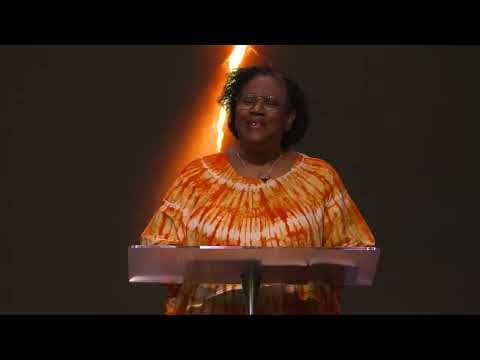
Good morning. My name is Jemima, and I'm part of the team here at Brompton Road. We are currently in the book of Ephesians in a sermon series exploring the church — what it is, and why it matters. Last week we heard from Nikita, who spoke from Ephesians chapter 2. This morning I want to speak to you from Ephesians chapter 3 about the manifold wisdom of God.
If God wanted to show his wisdom and power to the world, what would he choose? Would he choose a galaxy, a mountain range, or perhaps some awe-inspiring miracle? According to Ephesians chapter 3, God has chosen to display his wisdom through the church.
Our reading this morning is Ephesians 3:7–12:
I became a servant of this gospel by the gift of God's grace given me through the working of his power. Although I am less than the least of all the Lord's people, this grace was given me to preach to the Gentiles the boundless riches of Christ and to make plain to everyone the administration of this mystery, which for ages past was kept hidden in God who created all things. His intent was that now, through the church, the manifold wisdom of God should be made known to the rulers and authorities in the heavenly realms, according to his eternal purpose that he accomplished in Christ Jesus our Lord. In him and through faith in him, we may approach God with freedom and confidence.
Lord Jesus, I pray that you would speak to us this morning. That you would show us your glory and the fullness of your wisdom and your plan for your church, in Jesus' name. Amen.
It was my English teacher who first explained to me the difference between knowledge and wisdom. She said, "Jemima, knowledge is knowing that a tomato is a fruit. And wisdom is knowing not to put it in your fruit salad."
We live in the most informed generation the world has ever known. Today, a person can ask AI any question. We can navigate any city, translate languages instantly, compare thousands of products, or listen to world-class lectures. We have the entirety of the world's knowledge in our pockets.
Yet despite this unprecedented access to information, Western society continues to struggle with questions like: What is the meaning of life? What makes a good relationship? How should we use technology? What is truth? We have more knowledge than previous generations, but not necessarily more wisdom.
So where can true wisdom be found? Paul answers this question in Ephesians. He is clear that true wisdom can't be found in a philosophy, an education system, or even a set of principles. His answer is that true wisdom is in fact a person — and that person is Jesus.
In Ephesians 3:8–9, Paul says:
Although I am less than the least of the Lord's people, this grace was given me to preach to the Gentiles the boundless riches of Christ, and to make plain to everyone the administration of this mystery, which for the ages past was kept hidden in God.
When Paul says the mystery was kept hidden in God, there are two things to bear in mind. First, the mystery Paul is referring to is ultimately Jesus himself. Second, this means God's plan to save all people did not begin when Jesus came — it existed in the mind of God from eternity. From the beginning, he intended to gather people from every nation into one family of God through Jesus.
He was chosen before the creation of the world, but was revealed in these last times for your sake. (1 Peter 1:20)
In the Old Testament, the mystery of the person of Jesus was hidden, but it wasn't completely absent. The Old Testament contained clues. It spoke of the day when the Gentiles would worship the God of Israel — but it didn't explain how. How could people from many nations be brought together into one family of God? The answer is revealed in Jesus.
God's manifold — his multifaceted — wisdom is most clearly seen at the cross of Jesus. To the world, the crucifixion looked like weakness and failure. Here was a rejected Messiah, a crucified king, an apparent defeat. And yet what seemed like foolishness to so many was in fact the very means by which God's salvation plan for his church was being accomplished.
Through the cross, God did far more than people realized. What looked like the end was actually God putting everything back together exactly how it should be. Through his death and resurrection, Jesus:
The great mystery that had been hidden for generations was finally revealed. At the cross of Jesus, the wisdom of God was displayed in all its fullness.
And God's invitation was never just for one group of people — it was for everyone. Whatever your background, your culture, your status, your story, through faith in Jesus you are welcomed into God's family. You are welcomed into this church. You are welcome to share in his promises. What seemed weak and foolish turned out to be the most powerful, the most wise act in all of human history.
I used to be an RE teacher in a secondary school, and I absolutely loved it. I loved the classroom, my subject, and watching my students grow. But like most jobs, once you've been there a while there's a natural progression — you apply for promotions, you move up, you move forward. The trouble is, the higher up in teaching you go, the less time you actually spend in the classroom. And I just didn't want that.
I remember noticing my peers who I had trained with getting promotions. One of my friends said, "Jemima, don't you think it's time to apply for something?" What she was really saying was, "I'm not sure the decisions you're making for your life are wise." But what she didn't know was that I believed God had called me into that space. It looked to them that I lacked ambition, that I was foolish — but I was exactly where I believed God wanted me to be.
Sometimes following Jesus can mean redefining wisdom. The wisdom of God isn't always measured by status, income, or influence. Sometimes what looks foolish in the eyes of the world turns out to be the wiser choice. The question isn't simply what will make me more successful? but what will make me more like Christ?
In Ephesians 3:10–11, Paul says:
His intent was that now, through the church, the manifold wisdom of God should be made known to the rulers and authorities in the heavenly realms, according to his eternal purpose that he accomplished in Christ Jesus our Lord.
If Jesus is the embodiment of the manifold wisdom of God, then the church is the living evidence that this wisdom works. Every church is made up of ordinary people with ordinary struggles. But every addiction broken, every relationship restored, every person who discovers new hope and purpose — that is evidence that God is at work.
The church isn't just a gathering of people who have their lives all together. It is a community of people transformed by Jesus.
This is exactly what Paul is getting at in Ephesians. This letter is mostly about the reconciliation between Jews and Gentiles — two groups with a long history of division and hostility. But the miracle of the gospel is not just that God brings diverse people together. London is full of diversity; diverse people live alongside each other in this city, and that is incredible. The gospel does something more: it makes us one. Through the wisdom of God at the cross, God creates a new people whose deepest identity is found in him.
I recently joined an online book club — and please don't judge me. I love it because once a month we get together and chat about what we've been reading. Everyone in the club gets on because we share a common interest: we all love cozy mysteries. That's usually how communities work. You gather around people with shared interests, similar backgrounds, life experiences, values, education, culture — maybe even the same political views. We naturally gravitate towards people like us.
But the church is different. It isn't built around hobbies, culture, social status, or political viewpoints. It's unity found in Jesus. In a city like London, where people come from every part of the globe, it is quite something when people who would never normally mix — let alone choose each other — become true friends, worshipping and serving and doing life together. When that happens, God's wisdom is on display for the world to see.
The reason this is even possible is because Jesus is sufficient:
The church is not ultimately a testimony to great leadership or clever strategy. It is a testimony to the power of Jesus. Every unlikely friendship points beyond itself to the one who is making all things new.
One of the most surprising things about Ephesians 3 is who is watching. Paul says that God's wisdom is being made known to the rulers and authorities in the heavenly realms. In other words, the church isn't simply on display for the world — it's also on display for heaven. Heaven itself is watching God's plan of salvation unfold.
...even angels long to look into these things. (1 Peter 1:12)
Imagine that. Angels are watching as God takes ordinary, imperfect people and transforms them by his grace. They watch as people encounter Jesus for themselves, as barriers are broken down and lives are changed in ways that human effort alone could never achieve.
Paul says in verse 8:
Although I am less than the least of the Lord's people, this grace was given me to preach to the Gentiles the boundless riches of Christ.
What strikes me is Paul's humility. He doesn't say, "God chose me because I'm really gifted." He says the opposite: "I am less than the least of God's people." Not because he lacked confidence, but because he never forgot who he was before he encountered Jesus. He was cruel. He was self-righteous. And yet God entrusted him with the privilege of sharing the gospel.
In Acts 1:8, Jesus says to his disciples, "You will be my witnesses." God doesn't wait for you to reach a certain level of spiritual readiness before he uses you. His calling is not built on human adequacy — it never has been.
Throughout the Bible, God repeatedly chooses people who are deeply aware of their own limitations and weaknesses. Not because weakness is an advantage in itself, but because it leaves no confusion about where the power comes from. God is not looking for perfect individuals. He is looking for willing individuals.
Paul says, "This grace was given me." The same grace that saved him also sent him. God's grace didn't just forgive his past; it gave him a purpose for his future. The God who called Paul, knowing everything about his past, is the same God who calls us, knowing everything about ours. Our weaknesses do not put us outside of his purpose. If anything, they remind us that this is his work and not ours.
Think how easy it is to tell people about a Netflix series you're watching. I don't feel the need to qualify myself before telling someone how good a TV show is. I tell them because I think it's great, I enjoyed it, and I believe they'll be impacted by it. So I share.
The difference, of course, is that we're not just sharing something interesting. When we talk about the gospel — about the person of Jesus — we are pointing people to the one who saves. And even then, the focus isn't on how convincing we are, but on who he is.
In a world where everyone is trying to build a platform, grow their following, and make a name for themselves, Christians are called to do something very different. You are called to make known the boundless riches of Christ.
I sometimes wonder how we as Christians come across to other people. From our perspective, we're just a group of people gathering on a Sunday morning, having conversations over coffee, serving, praying, singing together, trying to encourage each other as we go about our busy lives.
But Paul says that God has chosen you. God has chosen us as a church to be the evidence of his wisdom. We are not spectators in God's plan for the church. By his grace, we have been brought in to participate in that plan.
In Jesus' name. Amen.
Good morning. My name is Jemima, and I'm part of the team here at Brompton Road. We are currently in the book of Ephesians in a sermon series exploring the church — what it is, and why it matters. Last week we heard from Nikita, who spoke from Ephesians chapter 2. This morning I want to speak to you from Ephesians chapter 3 about the manifold wisdom of God.
If God wanted to show his wisdom and power to the world, what would he choose? Would he choose a galaxy, a mountain range, or perhaps some awe-inspiring miracle? According to Ephesians chapter 3, God has chosen to display his wisdom through the church.
Our reading this morning is Ephesians 3:7–12:
I became a servant of this gospel by the gift of God's grace given me through the working of his power. Although I am less than the least of all the Lord's people, this grace was given me to preach to the Gentiles the boundless riches of Christ and to make plain to everyone the administration of this mystery, which for ages past was kept hidden in God who created all things. His intent was that now, through the church, the manifold wisdom of God should be made known to the rulers and authorities in the heavenly realms, according to his eternal purpose that he accomplished in Christ Jesus our Lord. In him and through faith in him, we may approach God with freedom and confidence.
Lord Jesus, I pray that you would speak to us this morning. That you would show us your glory and the fullness of your wisdom and your plan for your church, in Jesus' name. Amen.
It was my English teacher who first explained to me the difference between knowledge and wisdom. She said, "Jemima, knowledge is knowing that a tomato is a fruit. And wisdom is knowing not to put it in your fruit salad."
We live in the most informed generation the world has ever known. Today, a person can ask AI any question. We can navigate any city, translate languages instantly, compare thousands of products, or listen to world-class lectures. We have the entirety of the world's knowledge in our pockets.
Yet despite this unprecedented access to information, Western society continues to struggle with questions like: What is the meaning of life? What makes a good relationship? How should we use technology? What is truth? We have more knowledge than previous generations, but not necessarily more wisdom.
So where can true wisdom be found? Paul answers this question in Ephesians. He is clear that true wisdom can't be found in a philosophy, an education system, or even a set of principles. His answer is that true wisdom is in fact a person — and that person is Jesus.
In Ephesians 3:8–9, Paul says:
Although I am less than the least of the Lord's people, this grace was given me to preach to the Gentiles the boundless riches of Christ, and to make plain to everyone the administration of this mystery, which for the ages past was kept hidden in God.
When Paul says the mystery was kept hidden in God, there are two things to bear in mind. First, the mystery Paul is referring to is ultimately Jesus himself. Second, this means God's plan to save all people did not begin when Jesus came — it existed in the mind of God from eternity. From the beginning, he intended to gather people from every nation into one family of God through Jesus.
He was chosen before the creation of the world, but was revealed in these last times for your sake. (1 Peter 1:20)
In the Old Testament, the mystery of the person of Jesus was hidden, but it wasn't completely absent. The Old Testament contained clues. It spoke of the day when the Gentiles would worship the God of Israel — but it didn't explain how. How could people from many nations be brought together into one family of God? The answer is revealed in Jesus.
God's manifold — his multifaceted — wisdom is most clearly seen at the cross of Jesus. To the world, the crucifixion looked like weakness and failure. Here was a rejected Messiah, a crucified king, an apparent defeat. And yet what seemed like foolishness to so many was in fact the very means by which God's salvation plan for his church was being accomplished.
Through the cross, God did far more than people realized. What looked like the end was actually God putting everything back together exactly how it should be. Through his death and resurrection, Jesus:
The great mystery that had been hidden for generations was finally revealed. At the cross of Jesus, the wisdom of God was displayed in all its fullness.
And God's invitation was never just for one group of people — it was for everyone. Whatever your background, your culture, your status, your story, through faith in Jesus you are welcomed into God's family. You are welcomed into this church. You are welcome to share in his promises. What seemed weak and foolish turned out to be the most powerful, the most wise act in all of human history.
I used to be an RE teacher in a secondary school, and I absolutely loved it. I loved the classroom, my subject, and watching my students grow. But like most jobs, once you've been there a while there's a natural progression — you apply for promotions, you move up, you move forward. The trouble is, the higher up in teaching you go, the less time you actually spend in the classroom. And I just didn't want that.
I remember noticing my peers who I had trained with getting promotions. One of my friends said, "Jemima, don't you think it's time to apply for something?" What she was really saying was, "I'm not sure the decisions you're making for your life are wise." But what she didn't know was that I believed God had called me into that space. It looked to them that I lacked ambition, that I was foolish — but I was exactly where I believed God wanted me to be.
Sometimes following Jesus can mean redefining wisdom. The wisdom of God isn't always measured by status, income, or influence. Sometimes what looks foolish in the eyes of the world turns out to be the wiser choice. The question isn't simply what will make me more successful? but what will make me more like Christ?
In Ephesians 3:10–11, Paul says:
His intent was that now, through the church, the manifold wisdom of God should be made known to the rulers and authorities in the heavenly realms, according to his eternal purpose that he accomplished in Christ Jesus our Lord.
If Jesus is the embodiment of the manifold wisdom of God, then the church is the living evidence that this wisdom works. Every church is made up of ordinary people with ordinary struggles. But every addiction broken, every relationship restored, every person who discovers new hope and purpose — that is evidence that God is at work.
The church isn't just a gathering of people who have their lives all together. It is a community of people transformed by Jesus.
This is exactly what Paul is getting at in Ephesians. This letter is mostly about the reconciliation between Jews and Gentiles — two groups with a long history of division and hostility. But the miracle of the gospel is not just that God brings diverse people together. London is full of diversity; diverse people live alongside each other in this city, and that is incredible. The gospel does something more: it makes us one. Through the wisdom of God at the cross, God creates a new people whose deepest identity is found in him.
I recently joined an online book club — and please don't judge me. I love it because once a month we get together and chat about what we've been reading. Everyone in the club gets on because we share a common interest: we all love cozy mysteries. That's usually how communities work. You gather around people with shared interests, similar backgrounds, life experiences, values, education, culture — maybe even the same political views. We naturally gravitate towards people like us.
But the church is different. It isn't built around hobbies, culture, social status, or political viewpoints. It's unity found in Jesus. In a city like London, where people come from every part of the globe, it is quite something when people who would never normally mix — let alone choose each other — become true friends, worshipping and serving and doing life together. When that happens, God's wisdom is on display for the world to see.
The reason this is even possible is because Jesus is sufficient:
The church is not ultimately a testimony to great leadership or clever strategy. It is a testimony to the power of Jesus. Every unlikely friendship points beyond itself to the one who is making all things new.
One of the most surprising things about Ephesians 3 is who is watching. Paul says that God's wisdom is being made known to the rulers and authorities in the heavenly realms. In other words, the church isn't simply on display for the world — it's also on display for heaven. Heaven itself is watching God's plan of salvation unfold.
...even angels long to look into these things. (1 Peter 1:12)
Imagine that. Angels are watching as God takes ordinary, imperfect people and transforms them by his grace. They watch as people encounter Jesus for themselves, as barriers are broken down and lives are changed in ways that human effort alone could never achieve.
Paul says in verse 8:
Although I am less than the least of the Lord's people, this grace was given me to preach to the Gentiles the boundless riches of Christ.
What strikes me is Paul's humility. He doesn't say, "God chose me because I'm really gifted." He says the opposite: "I am less than the least of God's people." Not because he lacked confidence, but because he never forgot who he was before he encountered Jesus. He was cruel. He was self-righteous. And yet God entrusted him with the privilege of sharing the gospel.
In Acts 1:8, Jesus says to his disciples, "You will be my witnesses." God doesn't wait for you to reach a certain level of spiritual readiness before he uses you. His calling is not built on human adequacy — it never has been.
Throughout the Bible, God repeatedly chooses people who are deeply aware of their own limitations and weaknesses. Not because weakness is an advantage in itself, but because it leaves no confusion about where the power comes from. God is not looking for perfect individuals. He is looking for willing individuals.
Paul says, "This grace was given me." The same grace that saved him also sent him. God's grace didn't just forgive his past; it gave him a purpose for his future. The God who called Paul, knowing everything about his past, is the same God who calls us, knowing everything about ours. Our weaknesses do not put us outside of his purpose. If anything, they remind us that this is his work and not ours.
Think how easy it is to tell people about a Netflix series you're watching. I don't feel the need to qualify myself before telling someone how good a TV show is. I tell them because I think it's great, I enjoyed it, and I believe they'll be impacted by it. So I share.
The difference, of course, is that we're not just sharing something interesting. When we talk about the gospel — about the person of Jesus — we are pointing people to the one who saves. And even then, the focus isn't on how convincing we are, but on who he is.
In a world where everyone is trying to build a platform, grow their following, and make a name for themselves, Christians are called to do something very different. You are called to make known the boundless riches of Christ.
I sometimes wonder how we as Christians come across to other people. From our perspective, we're just a group of people gathering on a Sunday morning, having conversations over coffee, serving, praying, singing together, trying to encourage each other as we go about our busy lives.
But Paul says that God has chosen you. God has chosen us as a church to be the evidence of his wisdom. We are not spectators in God's plan for the church. By his grace, we have been brought in to participate in that plan.
In Jesus' name. Amen.