The living archive is loading.

Jesus in First John: Light, Love, and Life (Week 3)
Continue exploring
Connected by scripture or shared themes.
Jesus in First John: Light, Love, and Life (Week 3)
Continue exploring
Connected by scripture or shared themes.
Beloved, let us love one another because love is from God. This opening phrase from 1 John 4:7 sets the foundation for everything we explore today. The apostle John, who uses the word "beloved" more frequently than other biblical writers, is reminding us that we are loved. He addresses us directly: "You, the one that Jesus loves. Yes, I'm talking to you."
When John writes that "love is from God," he means that love originates with him—it is fashioned by him. Outside of God, there is no genuine love. We may have what looks like love, but if it does not come from God, I invite you to examine it carefully. The genuine article comes from God alone.
Everyone born of God is born of love. As one African proverb puts it: "The child of a lion is a lion." God, who is love, produces love. He empowers those who are born of him to love.
Notice that the scripture says God is love, not that God is loving. A mother or father may be loving, kind, patient, and caring. But there is not one person we can say is love itself. We are all flawed. We all have errors. But God is love. There is nothing that can capture this concept completely.
C.S. Lewis writes in Mere Christianity: "All sorts of people are fond of talking about Christian love, but they do not seem to understand that the Christian idea of love is based on the very nature of God."
In the Hebraic worldview, love is covenantal. It is loyal, faithful, active, embodied, and obedient. It is not merely soppy or cute. Covenantal love reminds us of marriage vows—to love and to hold, for richer for poorer, in sickness and in health. When God says he is love, he is coming into a covenant relationship with us and inviting us into covenant with him.
Consider 1 Corinthians 13: "Love is patient. Love is kind. Love is not envious or boastful or arrogant or rude. Love does not insist on its own way. It is not irritable. It keeps no record of wrong...Love never ends." If God is love, then we can say: God is patient, God is kind, God is not envious, God is not boastful. To understand who God is and his character, we can look right there at 1 Corinthians 13.
To have God, who is love, in us is to participate in an intimate relationship with God. The Father loves the Son, who loves the Spirit, who loves the Father. God did not need to create humans to love him—his love was already enough and overflowing. He created us to experience the overflow of the love that he embodies as Father, Son, and Holy Spirit.
In 1 John 4:9, we read that God's love was revealed among us in this way: "God sent his only son into the world so that we might live through him."
Love looks like something. It became visible. It entered history. It took on flesh. Love crossed the distance. Love came into the world that rejected him. Love hung on a cross, and the cross became a symbol of love.
Love is not merely an inner feeling. It is easy in our world today to say "I love you," and those words may mean something or nothing. But what follows matters. The actions that follow. In the biblical and Hebrew worldview, there is never just words—there is always an action following that word. That is what makes love covenantal.
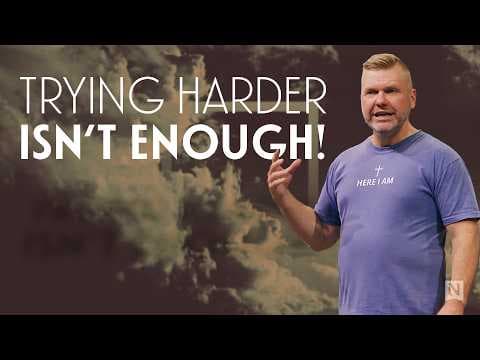
We do not generate Christian love by trying harder. Rather, we manifest the love that God reveals to us, and then we reveal it through us.
Love does not mask or ignore the presence of sin any more than light ignores darkness. God loves us, but this did not mean he turned a blind eye to sin. He saw the sin for what it was. He came into the sinful world and put on flesh like sinful man. He sent his only begotten Son. This is love: God dealing with sin through the self-giving of the Son.
There was a counterfeit spirituality in John's time—one that spoke of knowledge, enlightenment, and religious experience while failing to love. Perhaps in today's world you could liken it to coming to church, singing songs, even expressing the Spirit's power in different ways, and then going out and showing nothing for it. Love looks like something. Any spirituality that bypasses the incarnate and crucified Christ is not love.
Jesus could have come into this world and said, "I love you," and then gone away. But he didn't. He expressed it. He demonstrated it. Not only was he demonstrating that he loves us—he was demonstrating that Father God loves us. Did it cost him? Yes, it cost him everything. But he said, "For the joy set before me, I demonstrate my love. I show you my love. I express my love. Will you accept it?"
Paul writes in 1 Corinthians 13: "If I speak in the tongues of humans and of angels, but do not have love, I am a noisy gong or a clanging cymbals. And if I have prophetic power and understand all mysteries and all knowledge, and if I have all faith so that I can remove mountains, but do not have love, I am nothing."
Further: "If I give away all my possessions, and if I hand over my body so that I may boast, but do not have love, I gain nothing."
All of our philanthropy and charitable deeds are great, but if their root is not love, if their expression is not for love, then the Bible says they are nothing. We cannot stand before the gates of heaven and say, "But I gave a million pounds. But I gave up everything that I had," if it was not rooted in love. A loveless church is not a mature church. A loveless church is not a discerning church. A loveless church has lost sight of Jesus.
Eugene Peterson says, "A loveless world is a sightless world."
As we go through today, I invite you to ask yourself: Why do I do what I do? Is it rooted in love? This is not to make us feel condemned, but rather, perhaps, a reset. Lord, I want what I do to be rooted in love. I want what I say to be rooted in love. I want what I don't say to be rooted in love.
Consider Jesus Christ on the cross. This is the phenomenon that God would send his son to be the atoning sacrifice for a people who may not even reciprocate that love back to him. But he did it so that we could have the opportunity to experience the love that he experiences and also to be a conduit of that love.
Verse 10 says: "In this is love, not that we loved God, but that he loved us and sent his son to be the atoning sacrifice for our sins."
John 1:16 puts it this way: "Out of his fullness, Jesus' fullness, his abundance, we have all received grace upon grace. It's a gift given to us that God made the ultimate payment for. We don't have to love in order to earn his love. It's not that way around. It's that we receive it so that we can express it and demonstrate it."
"If we love one another, God abides in us and his love is perfected in us" (1 John 4:12).
When we look at this idea of "perfected," it means it's made complete in us. It's brought to full expression. It's fulfilled. It's accomplished. There's an unfolding of this love.
When we look at Jesus on the cross, that is love perfection. When we love one another, we are then expressing it. We are bringing it to fruition in the lives of those around us and through us.
Perfection is another word for full strength, maximum capacity, maximum effectiveness. Imagine a clown with a handkerchief that just keeps coming out more and more and more. That is how we might see this element of perfection. You're giving and then there is more and then there is more. Just when you thought you've experienced all of God's love, there is more. When we love one another, we're stepping into new and deeper and greater dimensions of love.
"By this we know that we abide in him and he in us because he has given us of his spirit" (1 John 4:13).
There is no way that we can walk out of here and simply muster up all our will to express God's love. That's great, but actually, it's the power of God given to us by his Spirit that gives us the will and the ability to walk and demonstrate all that he is.
When we have reached the end of our own love—and I think we do many times—we turn to God and say, "God, I'm all out. Nothing left. Help me." And he is able to help us. We might run out of love, but God can never run out of love because he is love. Unless he runs out of himself, and he cannot do that.
The Message version words this idea of abide like this: "God is love. When we take up a permanent residence in the life of love, we live in God and God lives in us. We enter the overflowing love relationship of the Trinity."
"Like the electricity running through electrical wires in our houses, love comes from God, then flows through us and to others in the community." It does not originate from us. It cannot. But we can trust the God who is love.
What does love look like in a multicultural, multi-generational church? It looks like saying hello at the door. It looks like smiling at the person sat next to you. It must look like hospitality—gathering in homes or restaurants together, finding out how each other's doing.
It looks like justice. It looks like discipleship and reconciliation, generosity, and prayer. Sometimes we're not able to do absolutely anything else, but we might just be able to pray for the person. This love looks like caring for the vulnerable and commitment to one another.
The call to love one another is a command. It's not a suggestion. It's not an option. It's not a good idea. It's a command. Verse 21 says: "The commandment we have from him is this. Those who love God must love their brothers and sisters."
This love reminds us that we are family. When we accept the lordship of Jesus into our lives, we become a family. When I'm expressing my love to you and you're expressing your love to me, we are reminding the world around us that we are family. It's the most powerful demonstration.
Jesus, in his last prayer at Gethsemane, prayed this: "Love one another as I have loved you. And they will know that you are Christians by our love."
"Love has been perfected among us in this way, that we may have boldness on the day of judgment because as he is, so are we in this world. There is no fear in love, but perfect love casts out fear. For fear has to do with punishment, and whoever fears has not reached perfection in love" (1 John 4:17-18).
The first thing that stands out is this: As he is, so are we. There is no fear in God. Therefore, there should be no fear in us. As he is, so are we in this world. There is no fear in him. Therefore, there should be no fear in you.
The Message version says: "Since fear is crippling, a fearful life—fear of death, fear of judgment—is one not yet fully formed in love."
When we look at ourselves and ask, "Am I fearful?" If the answer is yes, the prayer is: "Lord, let me have a revelation of your love. Let me walk in the revelation of your love even more, because you have already completed the work."
Perfect love brings us an assurance and confidence before God. When we know the love of God, we are freed from fear. When we walk in this love, we become an embodied apologetic—a defender of the faith. The world sees something of God when believers love across the differences and forgive one another.
First, fear of rejection. When we are fearful about the place of judgment, one of the things we fear is rejection—that we will be judged and it will not be judged in our favor. But when we remember that Jesus' love has freed us, we are not to be fearful. When we remember that we are accepted in the beloved, there is no reason to fear rejection. We have been accepted by the one who matters most.
Galatians 2:20 says: "I have been crucified with Christ. I no longer live, but Christ lives in me. The life I live in the body I live by faith in the Son of God who loved me and gave himself up for me."
If God could make the ultimate sacrifice of loving us and of loving us in spite of and despite of, then we can walk without fear that he's going to turn and reject us.
Second, fear of judgment is gone. Punishment is something that makes us fearful and unhappy. But Romans 8:31 reminds us: "What then are we to say about these things? If God is for us, who can be against us? God, who did not withhold his own Son, but gave him up for all of us, will he not with him also give us everything else?"
The fear of judgment goes because we have received the mercy and grace from the cross.
Third, the fear of loving others sacrificially is dealt with. The love we've been reading about is agape love—unconditional love that God expressed to us. Jesus modeled sacrificial love. It's frightening to comprehend that we are called to a sacrificial kind of love. But as we experience and abide in his love and understand that it's the Holy Spirit working in us, we are released to love as he does.
One person in the Bible who demonstrated this love, aside from Jesus, is Paul. Once he experienced and encountered God on his way—he was actually going to kill Christians because of how much he felt hatred for them—he experienced God and began to express this truth and reality. He faced many things, and yet he says all of these things they don't count.
Romans 8:37 says: "No, in all these things we are more than conquerors through him who loved us. For I am convinced that neither death nor life, nor angels, nor rulers, nor things present, nor things to come, nor powers, no height, no depth, nor anything else in all creation will be able to separate us from the love of God that is in Christ Jesus."
Paul knew that there is nothing that can separate him from the love of God. The love that God has for us cannot be reduced or removed. Nothing we can do can make him love us more. Nothing that we do that we've done can make him love us less.
Paul was a man, a human being like you and I. But he had the spirit of God like you and I. Paul's words are: "Christ's love compels us. Because we are convinced that one died for all and therefore all died. Christ's love compels us."
John vocalizes what I hope we have all realized this afternoon: Love for God and love for one another are inseparable.
Repeatedly, John says: "Let us love one another because love is from God. Everyone who loves is born of God. Whoever does not love does not know God."
The last two verses declare: "Those who say, 'I love God and hate a brother or sister are liars. For those who do not love a brother or sister whom they have seen cannot love God whom they have not seen.'"
It's easier to love God because he's perfect compared to loving people. But we're being told here that if we who are seeing each other cannot love each other, then we cannot love God.
Jesus said, "This is a new commandment I give to you that you love one another." And then he also says, "If you love me, you will keep my command." The first commandment is: Love the Lord your God with all your heart. If you love the Lord, we obey him, right? And so if the second commandment is love your neighbor as yourself, what are you going to do because of the first commandment? You're going to love one another.
If we say we love God, then the other side of that coin is we love one another. We can say, "Help me, God. I want to do this." Yes, we can. And he will empower us and enable us to do that.
In the words of Martin Lloyd Jones: "As we dwell in Christ and as we manifest this love, we will know that we are in God. We will realize that we have nothing but him. And that though we are still imperfect, God will perfect the work in us. So that in the end he can present us faultless before the presence of his glory."
The more you and I are like Christ, the less we fear the day of judgment, and the greater will be our boldness as we think of that day when we stand before him. The more we say, "What would Jesus do?" and then do that. The more we will have boldness as we think of that day when we stand before him and the less fear we have.
Next week we will be looking at God is life. For God so loved the world that he gave his only son so whoever believes in him shall not perish but have eternal life.
Beloved, let us love one another because love is from God. This opening phrase from 1 John 4:7 sets the foundation for everything we explore today. The apostle John, who uses the word "beloved" more frequently than other biblical writers, is reminding us that we are loved. He addresses us directly: "You, the one that Jesus loves. Yes, I'm talking to you."
When John writes that "love is from God," he means that love originates with him—it is fashioned by him. Outside of God, there is no genuine love. We may have what looks like love, but if it does not come from God, I invite you to examine it carefully. The genuine article comes from God alone.
Everyone born of God is born of love. As one African proverb puts it: "The child of a lion is a lion." God, who is love, produces love. He empowers those who are born of him to love.
Notice that the scripture says God is love, not that God is loving. A mother or father may be loving, kind, patient, and caring. But there is not one person we can say is love itself. We are all flawed. We all have errors. But God is love. There is nothing that can capture this concept completely.
C.S. Lewis writes in Mere Christianity: "All sorts of people are fond of talking about Christian love, but they do not seem to understand that the Christian idea of love is based on the very nature of God."
In the Hebraic worldview, love is covenantal. It is loyal, faithful, active, embodied, and obedient. It is not merely soppy or cute. Covenantal love reminds us of marriage vows—to love and to hold, for richer for poorer, in sickness and in health. When God says he is love, he is coming into a covenant relationship with us and inviting us into covenant with him.
Consider 1 Corinthians 13: "Love is patient. Love is kind. Love is not envious or boastful or arrogant or rude. Love does not insist on its own way. It is not irritable. It keeps no record of wrong...Love never ends." If God is love, then we can say: God is patient, God is kind, God is not envious, God is not boastful. To understand who God is and his character, we can look right there at 1 Corinthians 13.
To have God, who is love, in us is to participate in an intimate relationship with God. The Father loves the Son, who loves the Spirit, who loves the Father. God did not need to create humans to love him—his love was already enough and overflowing. He created us to experience the overflow of the love that he embodies as Father, Son, and Holy Spirit.
In 1 John 4:9, we read that God's love was revealed among us in this way: "God sent his only son into the world so that we might live through him."
Love looks like something. It became visible. It entered history. It took on flesh. Love crossed the distance. Love came into the world that rejected him. Love hung on a cross, and the cross became a symbol of love.
Love is not merely an inner feeling. It is easy in our world today to say "I love you," and those words may mean something or nothing. But what follows matters. The actions that follow. In the biblical and Hebrew worldview, there is never just words—there is always an action following that word. That is what makes love covenantal.
We do not generate Christian love by trying harder. Rather, we manifest the love that God reveals to us, and then we reveal it through us.
Love does not mask or ignore the presence of sin any more than light ignores darkness. God loves us, but this did not mean he turned a blind eye to sin. He saw the sin for what it was. He came into the sinful world and put on flesh like sinful man. He sent his only begotten Son. This is love: God dealing with sin through the self-giving of the Son.
There was a counterfeit spirituality in John's time—one that spoke of knowledge, enlightenment, and religious experience while failing to love. Perhaps in today's world you could liken it to coming to church, singing songs, even expressing the Spirit's power in different ways, and then going out and showing nothing for it. Love looks like something. Any spirituality that bypasses the incarnate and crucified Christ is not love.
Jesus could have come into this world and said, "I love you," and then gone away. But he didn't. He expressed it. He demonstrated it. Not only was he demonstrating that he loves us—he was demonstrating that Father God loves us. Did it cost him? Yes, it cost him everything. But he said, "For the joy set before me, I demonstrate my love. I show you my love. I express my love. Will you accept it?"
Paul writes in 1 Corinthians 13: "If I speak in the tongues of humans and of angels, but do not have love, I am a noisy gong or a clanging cymbals. And if I have prophetic power and understand all mysteries and all knowledge, and if I have all faith so that I can remove mountains, but do not have love, I am nothing."
Further: "If I give away all my possessions, and if I hand over my body so that I may boast, but do not have love, I gain nothing."
All of our philanthropy and charitable deeds are great, but if their root is not love, if their expression is not for love, then the Bible says they are nothing. We cannot stand before the gates of heaven and say, "But I gave a million pounds. But I gave up everything that I had," if it was not rooted in love. A loveless church is not a mature church. A loveless church is not a discerning church. A loveless church has lost sight of Jesus.
Eugene Peterson says, "A loveless world is a sightless world."
As we go through today, I invite you to ask yourself: Why do I do what I do? Is it rooted in love? This is not to make us feel condemned, but rather, perhaps, a reset. Lord, I want what I do to be rooted in love. I want what I say to be rooted in love. I want what I don't say to be rooted in love.
Consider Jesus Christ on the cross. This is the phenomenon that God would send his son to be the atoning sacrifice for a people who may not even reciprocate that love back to him. But he did it so that we could have the opportunity to experience the love that he experiences and also to be a conduit of that love.
Verse 10 says: "In this is love, not that we loved God, but that he loved us and sent his son to be the atoning sacrifice for our sins."
John 1:16 puts it this way: "Out of his fullness, Jesus' fullness, his abundance, we have all received grace upon grace. It's a gift given to us that God made the ultimate payment for. We don't have to love in order to earn his love. It's not that way around. It's that we receive it so that we can express it and demonstrate it."
"If we love one another, God abides in us and his love is perfected in us" (1 John 4:12).
When we look at this idea of "perfected," it means it's made complete in us. It's brought to full expression. It's fulfilled. It's accomplished. There's an unfolding of this love.
When we look at Jesus on the cross, that is love perfection. When we love one another, we are then expressing it. We are bringing it to fruition in the lives of those around us and through us.
Perfection is another word for full strength, maximum capacity, maximum effectiveness. Imagine a clown with a handkerchief that just keeps coming out more and more and more. That is how we might see this element of perfection. You're giving and then there is more and then there is more. Just when you thought you've experienced all of God's love, there is more. When we love one another, we're stepping into new and deeper and greater dimensions of love.
"By this we know that we abide in him and he in us because he has given us of his spirit" (1 John 4:13).
There is no way that we can walk out of here and simply muster up all our will to express God's love. That's great, but actually, it's the power of God given to us by his Spirit that gives us the will and the ability to walk and demonstrate all that he is.
When we have reached the end of our own love—and I think we do many times—we turn to God and say, "God, I'm all out. Nothing left. Help me." And he is able to help us. We might run out of love, but God can never run out of love because he is love. Unless he runs out of himself, and he cannot do that.
The Message version words this idea of abide like this: "God is love. When we take up a permanent residence in the life of love, we live in God and God lives in us. We enter the overflowing love relationship of the Trinity."
"Like the electricity running through electrical wires in our houses, love comes from God, then flows through us and to others in the community." It does not originate from us. It cannot. But we can trust the God who is love.
What does love look like in a multicultural, multi-generational church? It looks like saying hello at the door. It looks like smiling at the person sat next to you. It must look like hospitality—gathering in homes or restaurants together, finding out how each other's doing.
It looks like justice. It looks like discipleship and reconciliation, generosity, and prayer. Sometimes we're not able to do absolutely anything else, but we might just be able to pray for the person. This love looks like caring for the vulnerable and commitment to one another.
The call to love one another is a command. It's not a suggestion. It's not an option. It's not a good idea. It's a command. Verse 21 says: "The commandment we have from him is this. Those who love God must love their brothers and sisters."
This love reminds us that we are family. When we accept the lordship of Jesus into our lives, we become a family. When I'm expressing my love to you and you're expressing your love to me, we are reminding the world around us that we are family. It's the most powerful demonstration.
Jesus, in his last prayer at Gethsemane, prayed this: "Love one another as I have loved you. And they will know that you are Christians by our love."
"Love has been perfected among us in this way, that we may have boldness on the day of judgment because as he is, so are we in this world. There is no fear in love, but perfect love casts out fear. For fear has to do with punishment, and whoever fears has not reached perfection in love" (1 John 4:17-18).
The first thing that stands out is this: As he is, so are we. There is no fear in God. Therefore, there should be no fear in us. As he is, so are we in this world. There is no fear in him. Therefore, there should be no fear in you.
The Message version says: "Since fear is crippling, a fearful life—fear of death, fear of judgment—is one not yet fully formed in love."
When we look at ourselves and ask, "Am I fearful?" If the answer is yes, the prayer is: "Lord, let me have a revelation of your love. Let me walk in the revelation of your love even more, because you have already completed the work."
Perfect love brings us an assurance and confidence before God. When we know the love of God, we are freed from fear. When we walk in this love, we become an embodied apologetic—a defender of the faith. The world sees something of God when believers love across the differences and forgive one another.
First, fear of rejection. When we are fearful about the place of judgment, one of the things we fear is rejection—that we will be judged and it will not be judged in our favor. But when we remember that Jesus' love has freed us, we are not to be fearful. When we remember that we are accepted in the beloved, there is no reason to fear rejection. We have been accepted by the one who matters most.
Galatians 2:20 says: "I have been crucified with Christ. I no longer live, but Christ lives in me. The life I live in the body I live by faith in the Son of God who loved me and gave himself up for me."
If God could make the ultimate sacrifice of loving us and of loving us in spite of and despite of, then we can walk without fear that he's going to turn and reject us.
Second, fear of judgment is gone. Punishment is something that makes us fearful and unhappy. But Romans 8:31 reminds us: "What then are we to say about these things? If God is for us, who can be against us? God, who did not withhold his own Son, but gave him up for all of us, will he not with him also give us everything else?"
The fear of judgment goes because we have received the mercy and grace from the cross.
Third, the fear of loving others sacrificially is dealt with. The love we've been reading about is agape love—unconditional love that God expressed to us. Jesus modeled sacrificial love. It's frightening to comprehend that we are called to a sacrificial kind of love. But as we experience and abide in his love and understand that it's the Holy Spirit working in us, we are released to love as he does.
One person in the Bible who demonstrated this love, aside from Jesus, is Paul. Once he experienced and encountered God on his way—he was actually going to kill Christians because of how much he felt hatred for them—he experienced God and began to express this truth and reality. He faced many things, and yet he says all of these things they don't count.
Romans 8:37 says: "No, in all these things we are more than conquerors through him who loved us. For I am convinced that neither death nor life, nor angels, nor rulers, nor things present, nor things to come, nor powers, no height, no depth, nor anything else in all creation will be able to separate us from the love of God that is in Christ Jesus."
Paul knew that there is nothing that can separate him from the love of God. The love that God has for us cannot be reduced or removed. Nothing we can do can make him love us more. Nothing that we do that we've done can make him love us less.
Paul was a man, a human being like you and I. But he had the spirit of God like you and I. Paul's words are: "Christ's love compels us. Because we are convinced that one died for all and therefore all died. Christ's love compels us."
John vocalizes what I hope we have all realized this afternoon: Love for God and love for one another are inseparable.
Repeatedly, John says: "Let us love one another because love is from God. Everyone who loves is born of God. Whoever does not love does not know God."
The last two verses declare: "Those who say, 'I love God and hate a brother or sister are liars. For those who do not love a brother or sister whom they have seen cannot love God whom they have not seen.'"
It's easier to love God because he's perfect compared to loving people. But we're being told here that if we who are seeing each other cannot love each other, then we cannot love God.
Jesus said, "This is a new commandment I give to you that you love one another." And then he also says, "If you love me, you will keep my command." The first commandment is: Love the Lord your God with all your heart. If you love the Lord, we obey him, right? And so if the second commandment is love your neighbor as yourself, what are you going to do because of the first commandment? You're going to love one another.
If we say we love God, then the other side of that coin is we love one another. We can say, "Help me, God. I want to do this." Yes, we can. And he will empower us and enable us to do that.
In the words of Martin Lloyd Jones: "As we dwell in Christ and as we manifest this love, we will know that we are in God. We will realize that we have nothing but him. And that though we are still imperfect, God will perfect the work in us. So that in the end he can present us faultless before the presence of his glory."
The more you and I are like Christ, the less we fear the day of judgment, and the greater will be our boldness as we think of that day when we stand before him. The more we say, "What would Jesus do?" and then do that. The more we will have boldness as we think of that day when we stand before him and the less fear we have.
Next week we will be looking at God is life. For God so loved the world that he gave his only son so whoever believes in him shall not perish but have eternal life.